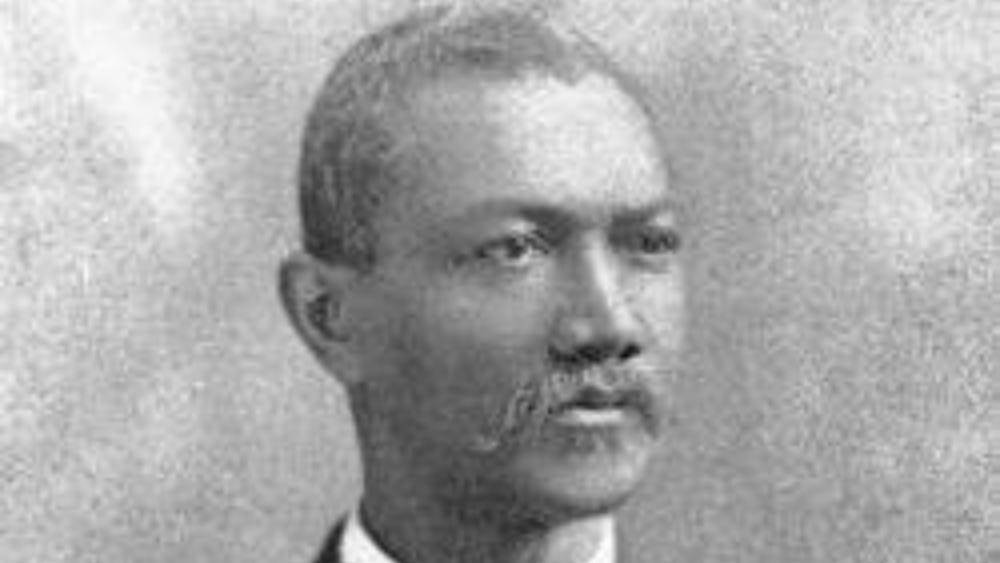
Lt. Col. Alexander Thomas Augusta stands as one of the most remarkable yet often overlooked figures of the American Civil War era. Born in 1825, at a time when opportunity was tightly restricted by race, Augusta rose to become a pioneering physician, a military leader, and the highest-ranking Black officer of the Civil War. His life’s work blended medicine, military service, and education, leaving a legacy that reshaped both the U.S. Army and American medical institutions.
Augusta’s story is not only about breaking barriers—it is about service, perseverance, and an unwavering commitment to healing and progress in a deeply divided nation.
Early Life and the Pursuit of Medical Knowledge
Alexander T. Augusta was born in Norfolk, Virginia, in 1825, during a period when Black Americans faced systemic oppression and limited access to education. Despite these obstacles, Augusta showed an early determination to pursue learning. Recognizing the severe limits on opportunity in the South, he moved north to pursue education, where paths forward—though still challenging—were more accessible.
Augusta studied medicine at Trinity College in Toronto, Canada, becoming one of the first Black physicians in North America. His medical training was rigorous, and he distinguished himself through discipline, intelligence, and compassion. Even before the Civil War began, Augusta was already living a life defined by crossing boundaries that society insisted should remain closed.
Answering the Call to Serve During the Civil War
When the Civil War erupted in 1861, Alexander T. Augusta saw an opportunity to serve a country that had yet to fully accept him as an equal citizen. In 1863, following the Emancipation Proclamation and the formation of the United States Colored Troops, Augusta was commissioned as a major in the U.S. Army—making him one of the first Black officers in the nation’s history.
His commission alone was historic. At a time when many doubted the ability of Black soldiers and leaders, Augusta’s appointment challenged deeply ingrained prejudices. He was assigned as the regimental surgeon of the 7th Infantry, United States Colored Troops, where he was responsible not only for medical care but also for maintaining the health and readiness of hundreds of soldiers.
Medicine on the Front Lines
Serving as a regimental surgeon during the Civil War was an immense responsibility. Battlefield medicine was brutal, understaffed, and often experimental. Augusta treated gunshot wounds, infections, amputations, and diseases that swept through military camps. His work required both technical skill and emotional resilience.
Despite facing discrimination from some white officers and civilians, Augusta carried out his duties with professionalism and resolve. His presence as a Black surgeon in uniform was itself a powerful symbol—one that affirmed the intelligence, capability, and leadership of Black Americans during a defining moment in U.S. history.
Augusta also advocated for fair treatment of Black soldiers, pushing for better medical care, living conditions, and recognition of their service. In doing so, he used his position not only to heal bodies but also to challenge injustice within the military system.
Promotion and Historic Recognition
In 1865, near the end of the Civil War, Alexander T. Augusta was promoted to brevet lieutenant colonel, making him the highest-ranking Black officer of the Civil War. The promotion was both symbolic and well-earned—a recognition of his exceptional service, leadership, and dedication.
This achievement marked a historic milestone. At a time when the nation was grappling with the meaning of freedom and citizenship, Augusta’s rank stood as evidence that Black Americans had not only fought for the Union but had led, healed, and sacrificed at the highest levels.

Building the Future at Howard University
After the war, Dr. Alexander T. Augusta continued his mission of service through education. He became a founding faculty member of the Howard University Medical Department, one of the most important institutions for training Black physicians in the United States.
At Howard, Augusta helped shape a new generation of doctors who would go on to serve underserved communities nationwide. His role as an educator was deeply personal—he understood firsthand how access to medical education could transform lives. Through teaching, mentorship, and leadership, he extended his impact far beyond his own lifetime.
Howard University’s medical school became a cornerstone for Black medical excellence. Also, Augusta’s influence helped establish its high standards and mission of service.
Facing Discrimination with Dignity and Resolve
Despite his accomplishments, Alexander T. Augusta’s life was not free from hardship. He faced racism throughout his military and civilian career, including public harassment and professional resistance. Yet, he met these challenges with dignity, refusing to allow prejudice to define his worth or limit his contributions.
Rather than retreat, Augusta pressed forward—using his skills, education, and authority to carve out space for progress. His life reminds us that people often achieve historic change not only through protest, but through persistence and excellence in the face of adversity.
A Lasting Legacy Honored in Arlington
Alexander T. Augusta passed away in 1890, but his legacy endures. He is buried in Arlington National Cemetery, Section 1, Grave 124-C, a place reserved for those who made extraordinary contributions to the nation. His burial there stands as a final recognition of a life dedicated to service, healing, and leadership.
Today, Augusta stands as a trailblazer in military history, medicine, and education. His story challenges us to reconsider whose contributions we remember and celebrate—and whose stories we still need to tell.
Remembering a Pioneer Who Changed History
Lt. Col. Alexander T. Augusta’s life reminds us that progress is often driven by individuals who refuse to accept the limits imposed upon them. As a physician, soldier, educator, and leader, Augusta broke barriers that once seemed unmovable.
His legacy lives on in every Black physician trained at institutions he helped build, in every soldier who serves knowing leadership is not defined by race, and in every story that restores his rightful place in American history. Alexander T. Augusta did more than make history—he helped heal a nation in its most fractured hour.