
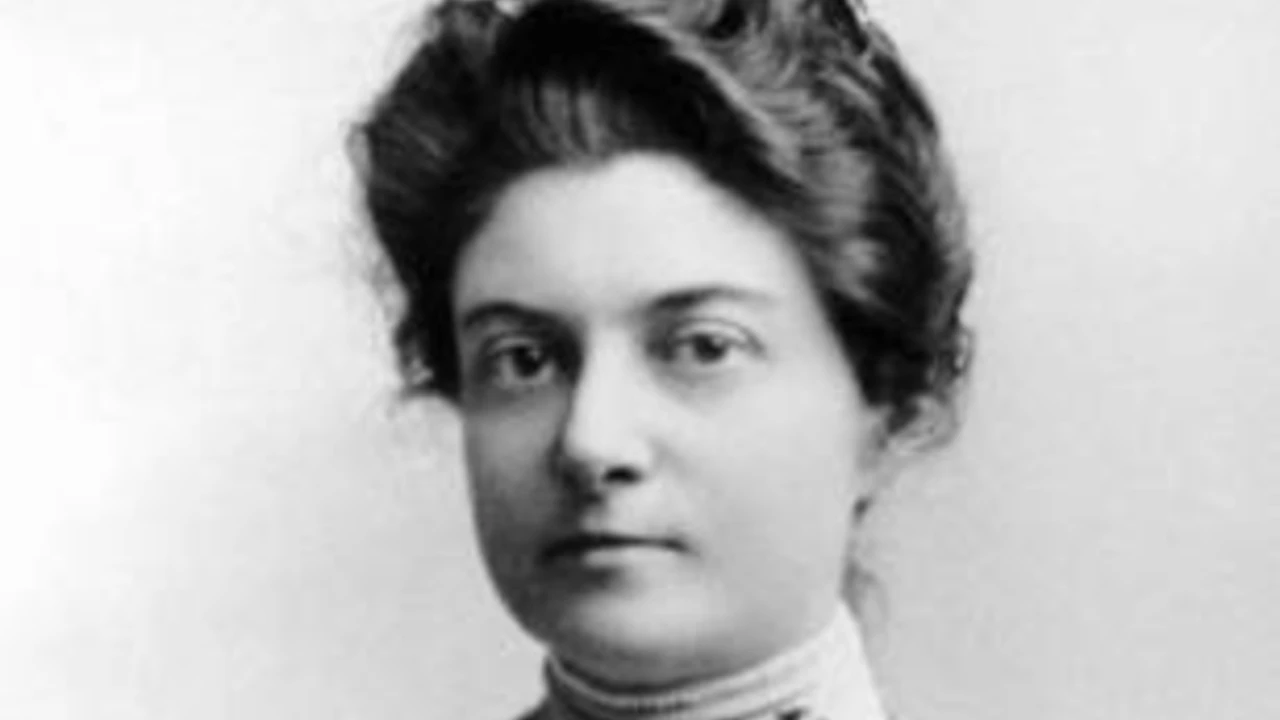
Dr. Anita Newcomb McGee was not the kind of woman history easily forgets—though for many years, it almost did. Born in 1864, at a time when women were rarely welcomed into professional medicine, McGee went on to shape one of the most critical institutions in U.S. military history: the Army Nurse Corps. Her life’s work quietly transformed battlefield care, elevated the role of women in the military, and ensured that nurses would never again be treated as temporary or expendable helpers during war.
Her story is not one of loud protest or dramatic rebellion. Instead, it is a story of persistence, organization, and an unshakable belief that proper medical care—and those who provided it—deserved structure, respect, and permanence.
A Woman Educated Against the Odds
Anita Newcomb McGee was born into an intellectually rich environment. Her father, Simon Newcomb, was a renowned astronomer and mathematician, which meant Anita grew up surrounded by ideas, books, and academic discipline. Still, even with privilege and intelligence on her side, the path to becoming a physician was far from smooth for a woman in the late 19th century.
In 1892, McGee earned her medical degree from Columbian College, now known as George Washington University. At the time, female physicians were rare and often dismissed as novelties rather than professionals. But McGee was not seeking novelty—she was seeking usefulness. She wanted to serve where she was needed most.
Answering the Call During the Spanish-American War
That opportunity arrived with the outbreak of the Spanish-American War in 1898. The U.S. Army struggled to provide adequate medical care. Disease killed more soldiers than combat, and the military relied on a disorganized, temporary nursing system staffed mostly by civilian volunteers.
Recognizing both the urgency of the moment and McGee’s exceptional organizational skills, the Army appointed her as Acting Assistant Surgeon and placed her in charge of the Army’s nurses. This was an extraordinary role for a woman at the time—and McGee approached it with precision and authority.
She evaluated nurses, set standards, and brought order to chaos. Under her leadership, nurses transformed from loosely supervised volunteers into a coordinated force delivering essential care in camps and hospitals nationwide.
Seeing the Bigger Problem
While many would have considered her wartime role a remarkable achievement on its own, McGee saw something deeper—and more troubling. Once the war ended, the nurses who had sacrificed their time, health, and sometimes their lives were simply dismissed. There was no permanent system, no recognition, and no future for military nursing as a profession.
McGee believed this was unacceptable.
She understood that wars would come again—and when they did, the Army could not afford to rebuild its nursing force from scratch. Nurses needed training, rank, accountability, and institutional respect. In short, they needed permanence.
Fighting for a Permanent Army Nurse Corps
After the war, McGee turned her energy toward advocacy. She wrote reports, met with officials, and drew on her firsthand experience to advocate for a permanent nursing corps within the U.S. Army. Her case was practical, not emotional: organized nursing saved lives, improved outcomes, and strengthened military readiness.
Her persistence paid off.
In 1901, Congress officially authorized the creation of the Army Nurse Corps—a landmark decision that forever changed military medicine. Though nurses would still face many struggles in the decades to come, McGee’s work ensured they would never again be an afterthought.
Today, the Army Nurse Corps remains one of the most respected nursing organizations in the world. Its foundation rests directly on McGee’s vision and determination.
Honoring the Nurses Who Served
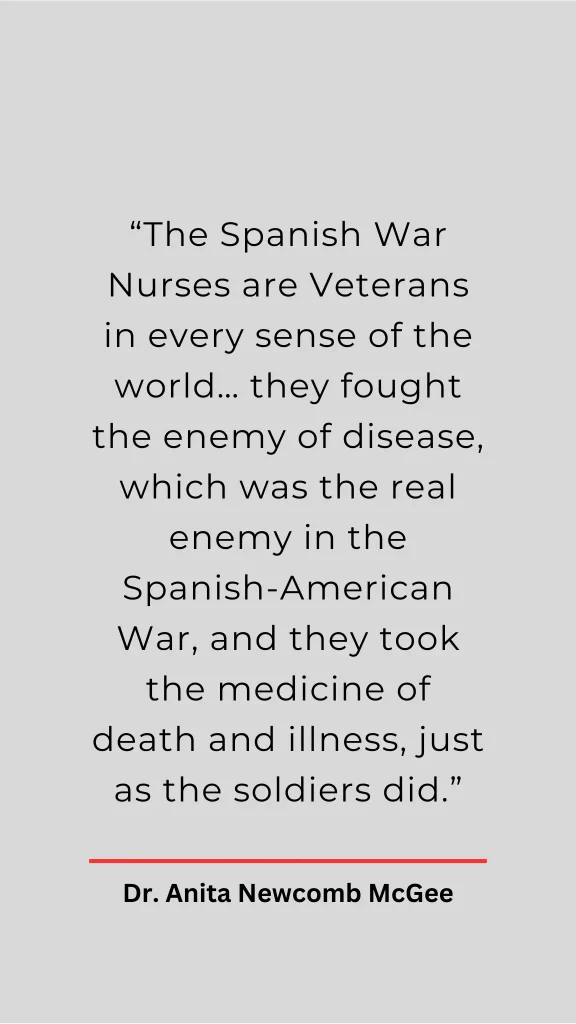
McGee’s dedication to military nurses did not end with legislation. She actively honored those who served—and those who died—during the Spanish-American War. Many nurses lost their lives not to bullets, but to disease contracted while caring for others.
Believing their sacrifice deserved permanent recognition, McGee led efforts to erect the Spanish-American War Nurses Monument at Arlington National Cemetery. Dedicated in 1905, the monument stands as a solemn tribute to the courage and compassion of military nurses.
It did more than honor the fallen—it declared that nurses mattered, that their service stood equal in dignity to any soldier’s, and that history would remember their contributions.
A Legacy Written in Care, Not Combat
Dr. Anita Newcomb McGee passed away in 1940, but her influence continues to shape military medicine today. Every nurse who dons a military uniform, every structured medical unit deployed in times of crisis, and every acknowledgment of nursing as a profession owes something to her work.
Her own grave lies at Arlington National Cemetery, Section 1, Grave 526B—fittingly among those she spent her life advocating for. She rests not as a footnote in history, but as a builder of institutions, a defender of caregivers, and a quiet force behind one of the Army’s most vital branches.
Remembering Dr. McGee Today
In an era that often measures leadership by visibility, Dr. Anita Newcomb McGee shows how true change-makers lead powerfully behind the scenes. She did not seek fame or accolades. She sought systems that worked, standards that endured, and recognition for those who served without expectation of glory.
Her life stands as a testament to what happens when compassion meets organization—and when one determined individual refuses to accept that “temporary” is good enough.
Because of Dr. McGee, military nursing became permanent. Because of her work, the Army Nurse Corps has saved countless lives.










“Reading well is one of the great pleasures that solitude can afford you.” by Harold Bloom.