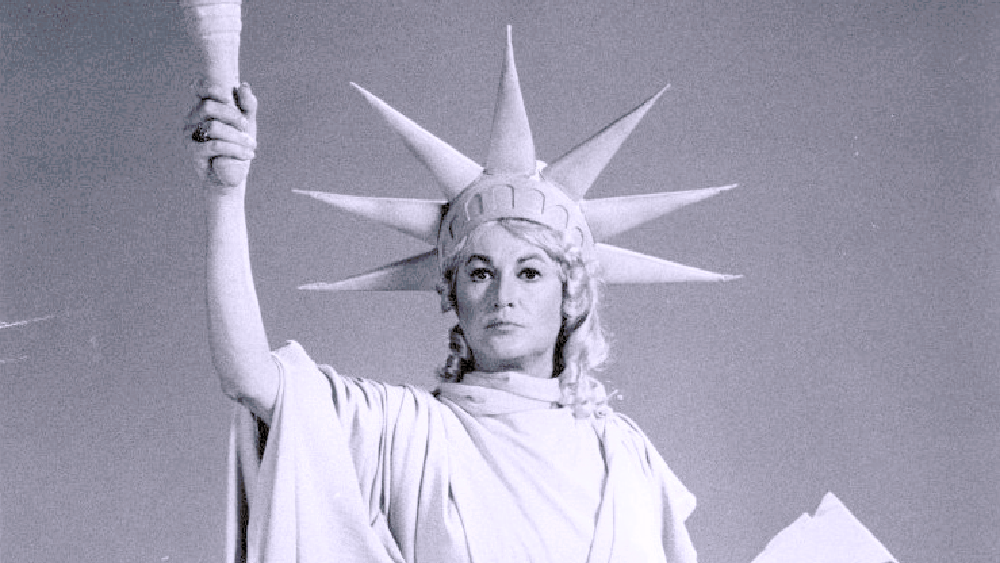
Beatrice Arthur, born Bernice Frankel on May 13, 1922, was a woman whose presence commanded attention even before she spoke. Known for her deep voice, razor-sharp wit, and towering talent, Arthur carved an indelible path through theater, television, and film. From the stages of New York to the living rooms of millions, she became a beloved icon, a feminist trailblazer, and a champion for marginalized communities.
Early Life and Formative Years
Bernice Frankel grew up in Brooklyn, New York, the daughter of Austrian-born Rebecca Pressner and Polish-born Philip Frankel. Alongside her sisters, Gertrude and Marian, she was raised in a Jewish household that instilled values of resilience and determination. When her family moved to Cambridge, Maryland, in 1933, her parents opened a women’s clothing shop, teaching her early lessons about hard work and independence.
At 16, Arthur faced a serious health challenge: coagulopathy, a condition that prevents blood from clotting properly. Concerned for her well-being, her parents sent her to Linden Hall, a girls’ boarding school in Pennsylvania, for her final two years of high school. She continued her studies at Blackstone College for Girls in Virginia, laying the foundation for a disciplined, ambitious young woman ready to embrace life’s opportunities.
During World War II, Arthur answered her country’s call, enlisting in the United States Marine Corps Women’s Reserve in 1943. Starting as a typist, she later trained as a truck driver and dispatcher at Camp Lejeune and Cherry Point, North Carolina. By the time she was honorably discharged in 1945, she had achieved the rank of staff sergeant, a testament to her commitment and capability.
After the war, Arthur briefly explored a career in medical technology but ultimately returned to her first love: performance. In 1947, she enrolled in the School of Drama at The New School in New York City, embarking on a journey that would transform her into a household name.
Theater: A Stage of Triumphs
Arthur’s early career was rooted firmly in theater. Studying under German director Erwin Piscator, she honed her craft at the Dramatic Workshop and performed in Off-Broadway productions, including The Threepenny Opera and Nature’s Way. Her Broadway debut came in Fiddler on the Roof as Yente the Matchmaker, displaying the charm and commanding presence that would become her signature.
A turning point came in 1966 when she auditioned for the title role in the musical Mame. Though Angela Lansbury won the part, Arthur took on the supporting role of Vera Charles, a choice that would earn her the Tony Award for Best Featured Actress in a Musical. She reprised this role in the 1974 film adaptation alongside Lucille Ball, cementing her reputation as a versatile and memorable performer.
Arthur continued to explore the stage throughout her career, appearing in Woody Allen’s The Floating Light Bulb and even making her Metropolitan Opera debut in 1994 in Donizetti’s La fille du régiment. Her stage work revealed not only her talent but also her dedication to diverse artistic pursuits, from musicals to opera.
Television Stardom: Maude and The Golden Girls
It was television, however, that made Arthur a star. In 1971, she appeared as Maude Findlay on Norman Lear’s All in the Family, playing a liberal feminist opposite the conservative Archie Bunker. Viewers were captivated, and CBS executives quickly offered her a spin-off: Maude (1972–1978).
On Maude, Arthur’s character tackled weighty social issues—abortion, women’s rights, mental health, and the Vietnam War—with intelligence, humor, and heart. Her performance earned her multiple Emmy nominations and a win in 1977, solidifying her status as both a trailblazer in television and a figure in the women’s liberation movement. Episodes like “Maude’s Dilemma” provoked national conversations, demonstrating Arthur’s courage in portraying a character unafraid to confront taboo subjects.
In 1985, Arthur found a new role that would further define her legacy: Dorothy Zbornak on The Golden Girls. As the witty, sarcastic, and fiercely intelligent roommate to Blanche, Rose, and Sophia, Arthur’s Dorothy became the heart of the show, balancing comedy with relatability. The series remained a top-rated program for six of its seven seasons, and Arthur earned another Emmy in 1988 for her performance. Even after the show ended, her work in The Golden Girls continues to resonate with audiences, old and new.

Film and Later Work
Arthur’s film credits, though less extensive than her television career, showcased her talent for both comedy and drama. From Lovers and Other Strangers to History of the World, Part I, she brought characters to life with the same sharp wit that defined her screen presence. She also embraced voice acting in shows like Futurama, displaying her ability to adapt to new media while remaining unmistakably Bea Arthur.
Following The Golden Girls, she returned to the stage and television with one-woman shows, guest appearances, and Broadway revivals. Her performances in Bea Arthur on Broadway: Just Between Friends and numerous tributes highlighted her continued passion for storytelling and her enduring influence on entertainment.
Personal Life and Advocacy
Arthur’s private life was as rich as her career. She was married twice—first to fellow Marine Robert Alan Aurthur, and later to director Gene Saks, with whom she adopted two sons, Matthew and Daniel. Known for her introverted nature, Arthur cherished her home life, her cooking, and her close relationships with friends and colleagues, including Adrienne Barbeau and Angela Lansbury.
Her advocacy work was equally remarkable. She championed women’s rights, LGBTQ+ issues, and older people care, using her platform to fight for equality and justice. She embraced her status as a gay icon, supporting LGBTQ+ youth through organizations like the Ali Forney Center. In one of her final performances, she raised $40,000 for the center, a contribution that continues to impact lives today.
Legacy: A Star That Still Shines
Bea Arthur passed away on April 25, 2009, at the age of 86, from cancer complications. Her death was mourned by fans, colleagues, and the theater community, with Broadway marquees dimmed in her honor and public tributes celebrating her life. Co-stars Rue McClanahan and Betty White spoke of her warmth and humor, while friends like Angela Lansbury and Adrienne Barbeau remembered her generosity and professional excellence.
Arthur’s legacy extends beyond awards and accolades—two Emmy wins, a Tony Award, multiple Golden Globe nominations, and her induction into the Television Hall of Fame in 2008. It lives on in the laughter she elicited, the barriers she broke, and the countless lives she touched both on and off-screen. The Bea Arthur Residence, an LGBTQ+ youth shelter opened in 2017, is a tangible testament to her compassion and commitment to others.
Bea Arthur was more than a towering comedic presence or a gifted actress. She was a pioneer who combined intelligence, courage, and humanity, leaving an indelible mark on American entertainment and society. From her early days in Brooklyn to the stages of Broadway and the screens of millions, she remained steadfast in her artistry, advocacy, and authenticity. Bea Arthur’s legacy is one of laughter, resilience, and unflinching dedication to making the world a better, kinder, and funnier place.