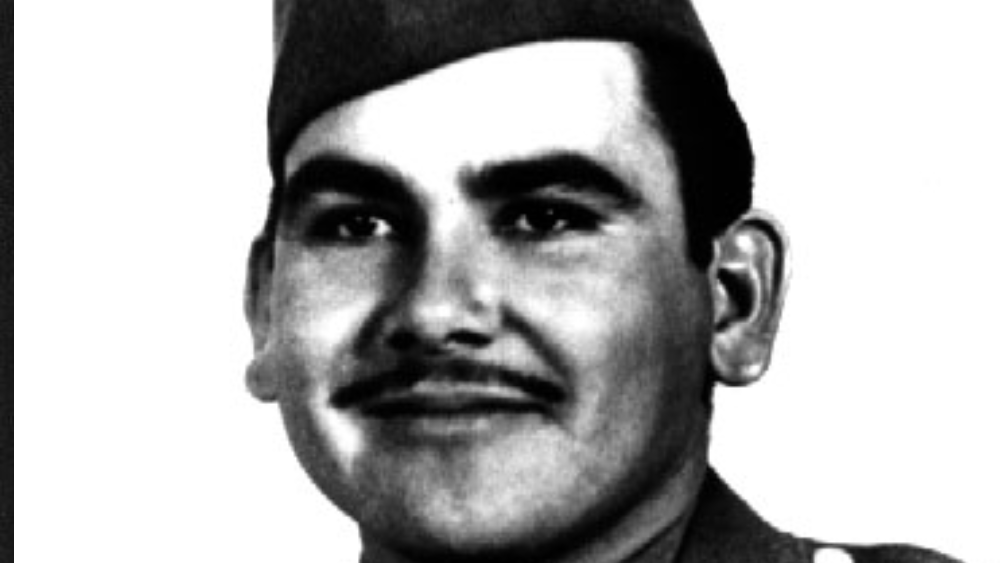
Felix Z. Longoria was more than a name on a battlefield roster; he was a symbol of courage, service, and the fight against injustice. Born on April 16, 1920, in Three Rivers, Texas, Longoria grew up in a modest Mexican-American household. Like many young men of his generation, he sought both opportunity and a better life. He eventually moved with his wife to Corpus Christi, Texas. There, he worked as a truck driver and helped raise their four-year-old daughter.
Despite the responsibilities at home, Longoria answered the call to serve his country during World War II. In November 1944, he enlisted in the United States Army, embracing the challenge of defending freedom abroad. Assigned to the 27th Infantry Regiment of the 25th Infantry Division, Longoria shipped out from Fort Ord, California, in late April 1945, heading to Luzon in the Philippines. Less than two weeks after his arrival, his platoon was ambushed by a hidden Japanese machine gunner. Felix Longoria was killed in action on June 16, 1945. Tragically, his remains were not recovered and identified until 1949, nearly four years after his death.
Growing Up in Segregated Texas: The Early Years
Understanding the context of Longoria’s story requires looking at the social climate of Texas during the 1940s. Mexican Americans, though counted as white on federal censuses, were often socially segregated and faced pervasive discrimination in schools, employment, and public services. In towns like Three Rivers, Mexican-American families were confined to neighborhoods west of the railroad tracks, a visible marker of segregation that reinforced social boundaries.
While Mexican-American soldiers often served alongside other Americans in integrated units during World War II, prejudice was never far away. On the home front, discrimination lingered, sometimes in subtle ways. Often, it appeared in stark, undeniable actions, as Longoria’s family would painfully discover.
Denied a Proper Farewell: The Funeral Home Controversy
After the war, when Longoria’s remains were finally returned to his family, they faced an injustice that shocked the nation. The widow of Private Longoria attempted to arrange a funeral service at the only funeral home in Three Rivers. Tom Kennedy, the director, refused, citing that because Felix was Mexican-American, “the whites would not like it.” Though Kennedy offered to hold a wake at the Longoria family home in the segregated Mexican-American neighborhood, this did not provide the honor that a war hero deserved.
The issue, which became known as the “Longoria Affair,” drew national attention thanks to the advocacy of Hector P. Garcia and the newly formed American GI Forum. Garcia was a Mexican-American physician and civil rights activist. He fought to ensure that Felix Longoria received the dignity and respect owed to a fallen soldier.
National Outcry and Arlington National Cemetery
As news of the discrimination spread, U.S. Senator Lyndon B. Johnson intervened, offering to have Longoria’s remains interred at Arlington National Cemetery in a full military ceremony. The New York Times and other national publications covered the story, highlighting the injustice faced by Mexican-American Veterans. Radio commentator Walter Winchell famously remarked, “The big state of Texas looks mighty small tonight,” reflecting the national outrage over the incident.
Longoria was buried at Arlington National Cemetery on February 16, 1949. His burial was more than a personal victory for his family. It became a landmark moment in the fight against racial discrimination in the United States. The ceremony buried eighteen other soldiers who had died overseas, honoring each with full military honors and ensuring the military recognized their sacrifices equally, regardless of race.
The Texas House Investigation: Racism on Trial
The controversy did not end with the Arlington burial. The Texas House of Representatives appointed a committee to investigate allegations of racism surrounding Longoria’s funeral. The Three Rivers Chamber of Commerce held the hearings and took testimonies regarding the funeral home’s actions. While the majority report claimed no racial discrimination had occurred, a minority report concluded that the funeral home’s treatment of Longoria was indeed discriminatory. Unfortunately, political maneuvering led to both reports being withdrawn from the official record, leaving only summaries without supporting documentation.
Honors for a Fallen Soldier
Felix Longoria was posthumously awarded the Purple Heart for his sacrifice, the Good Conduct Medal, and the Combat Infantryman Badge. These honors reflected both his bravery in combat and his commitment to his country. Yet, the significance of his story extends far beyond military decorations—it became a catalyst for social change.

A Catalyst for the Chicano Movement
The Longoria Affair played a pivotal role in the early stages of the post-World War II Chicano Movement. The American GI Forum, under Hector P. Garcia’s leadership, leveraged the national attention surrounding Longoria’s funeral to advocate for Mexican-American Veterans who faced discrimination. The incident mobilized communities, sparked the formation of local GI Forum chapters, and inspired a generation of activists to fight for equality and justice.
For many Mexican Americans, Felix Longoria’s story became a symbol of pride and resilience. It highlighted the paradox of a society that relied on the courage of Mexican-American soldiers abroad while denying them basic rights at home. The movement that grew from this struggle helped shape civil rights advocacy for Hispanic communities in the United States for decades to come.
Remembering Felix Longoria: Legacy and Commemoration
Years later, efforts to honor Longoria continued. Santiago Hernandez, a Corpus Christi resident, led the push to place a Texas Historical Marker at the site of the now-closed funeral home where Longoria had been denied services. Despite objections from local residents, the marker was approved and installed in 2010. It served as a public acknowledgment of both Longoria’s sacrifice and the injustice he endured, educating future generations about the ongoing struggle for equality.
Although demolition damaged and removed the original marker from the funeral home, the town rededicated and installed it in the town square, symbolizing the enduring importance of remembering Longoria’s story. Filmmakers also documented the events of the Longoria Affair in The Longoria Affair, further cementing his place in history.
Conclusion: A Legacy of Courage and Justice
Felix Z. Longoria’s life and the circumstances surrounding his death reveal a complex story of bravery, sacrifice, and the fight for civil rights. He served his country with courage, only to face prejudice after his death—a stark reminder of the systemic inequalities faced by Mexican Americans in the mid-20th century. The American GI Forum, Senator Lyndon B. Johnson, and countless supporters restored Longoria’s dignity and helped spark a movement to fight for the rights of all Mexican Americans.
Today, Felix Longoria is remembered not just as a soldier but as a symbol of justice and perseverance. His burial at Arlington National Cemetery, alongside other American heroes, serves as a lasting tribute. Commemorations in his hometown also honor his service and sacrifice. Longoria’s legacy continues to inspire generations. It reminds us that the fight for justice often begins at home, even for those who have fought bravely on foreign soil.