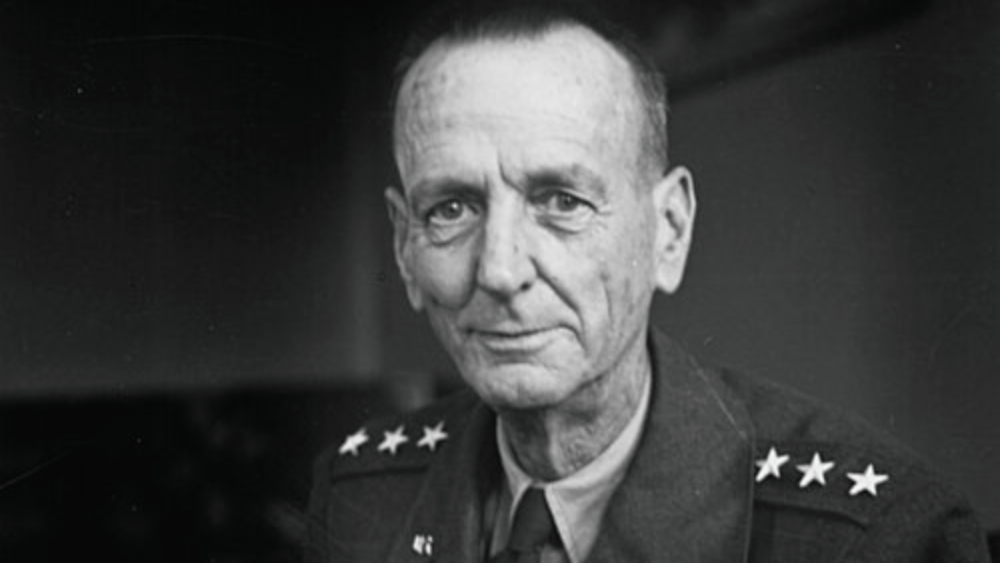
Gen. Jonathan Mayhew Wainwright IV was born on August 23, 1883, into a family deeply rooted in military tradition. His father had served in the U.S. Army, and from an early age, Wainwright understood the values of duty, honor, and sacrifice. These principles guided him when he entered the United States Military Academy at West Point, graduating in 1906. Over the following decades, Wainwright built a steady and respected Army career, earning a reputation as a disciplined officer who cared deeply for the welfare of the soldiers under his command.
By the time World War II erupted, Wainwright was a seasoned leader, shaped by years of service and a firm belief that a commander’s greatest responsibility was to those who served beneath him.
The Outbreak of War in the Pacific
The Japanese attack on Pearl Harbor in December 1941 thrust the United States into World War II and immediately placed the Philippines in grave danger. Japanese forces rapidly advanced through the Pacific, targeting American-held territories. In the Philippines, U.S. and Filipino troops faced overwhelming odds, lacking sufficient air support, supplies, and reinforcements.
As Japanese forces pressed forward, the defense of the Philippines became a desperate struggle for time and survival. What followed would test not only military strategy, but the moral strength of those in command.
Assuming Command of U.S. Forces in the Philippines
In March 1942, Gen. Douglas MacArthur was ordered to leave the Philippines and continue the fight from Australia. With MacArthur’s departure, command of all U.S. forces in the Philippines fell to Gen. Jonathan M. Wainwright.
It was an unenviable position. Supplies were dangerously low, disease and hunger were spreading among the troops, and Japanese forces held clear advantages in manpower and equipment. Despite these conditions, Wainwright accepted command without hesitation, determined to do everything possible to defend his men and the remaining strongholds.
The Fall of Bataan and Its Consequences
On April 9, 1942, after months of relentless combat and severe deprivation, the Bataan Peninsula fell to Japanese forces. The surrender marked one of the darkest chapters of the war in the Pacific. Tens of thousands of American and Filipino soldiers were captured and forced into what would become known as the Bataan Death March—an ordeal marked by brutality, exhaustion, starvation, and death.
Although Wainwright was not present on Bataan at the moment of surrender, the loss deeply affected him. He understood that Corregidor, the fortified island at the entrance of Manila Bay, was now the final symbol of American resistance in the Philippines.
The Defense of Corregidor
Following the fall of Bataan, Wainwright and thousands of remaining troops withdrew to Corregidor. Known as “The Rock,” the island endured constant Japanese bombardment from the air and sea. Soldiers lived largely underground in tunnels, surviving on limited food and medical supplies while tending to growing numbers of wounded.
Wainwright himself suffered from exhaustion and illness, yet he remained visible and engaged, sharing the hardships of his men. The defense of Corregidor became less about victory and more about endurance—holding out as long as possible in the face of inevitable defeat.
The Surrender of Corregidor, May 6, 1942
By early May, the situation on Corregidor had become untenable. Food was nearly gone, ammunition was scarce, and the wounded overwhelmed medical facilities. Facing an imminent Japanese ground assault, Wainwright was confronted with a devastating decision.
On May 6, 1942, Gen. Jonathan Wainwright ordered the surrender of Corregidor.
It was a decision made not to save himself, but to prevent the needless slaughter of his remaining troops. Fully aware that surrender would likely lead to years of captivity and possible condemnation, Wainwright chose mercy over pride. History would later recognize this decision as an act of moral courage.
Captivity as a Prisoner of War
Following the surrender, Wainwright was captured by Japanese forces and became their highest-ranking American prisoner of war. He was moved through a series of prison camps across the Philippines, Taiwan, and Manchuria. Conditions were harsh and unforgiving, marked by malnutrition, disease, and psychological strain.
Despite his rank, Wainwright received no special treatment. He endured the same hardships as the men he once commanded, reinforcing the bond he felt with his fellow prisoners.
Survival and Leadership in Japanese Prison Camps
Even in captivity, Wainwright remained a leader. He took responsibility for maintaining discipline and morale among American prisoners whenever possible. Though physically weakened, he resisted cooperation with enemy propaganda and carried the burden of surrender in silence, believing his actions might forever define his legacy.
For more than three years, he survived under conditions that claimed the lives of countless others, sustained by resilience and a sense of duty that never left him.
Liberation and the End of the War
In August 1945, following Japan’s collapse, Allied forces liberated prisoner-of-war camps across Asia. Wainwright was freed from captivity, severely underweight and frail, but unbroken in spirit.
One of the most powerful moments of redemption came shortly afterward when Wainwright stood aboard the USS Missouri on September 2, 1945, as Japan formally surrendered. Once a defeated commander and prisoner, he now stood as a witness to victory, representing endurance and honor in the face of unimaginable adversity.

Medal of Honor and National Recognition
Recognizing his extraordinary leadership and selfless decision-making, the United States awarded Gen. Jonathan Wainwright the Medal of Honor. The citation honored his steadfast defense of the Philippines, his concern for his men, and his willingness to share their fate rather than abandon them.
He was no longer defined by surrender, but by sacrifice.
Gen. Jonathan Wainwright Grave
Gen. Jonathan Wainwright retired as a four-star general and lived quietly until his death on September 2, 1953. His grave is in Arlington Cemetery in Section 1, Grave 358, remembered as one of America’s most respected wartime leaders.
Wainwright’s legacy endures as a reminder that true heroism is not always measured by victory on the battlefield, but by integrity, compassion, and the courage to place human lives above personal legacy. In Bataan and Corregidor, he proved that leadership means standing with your men—even in defeat.