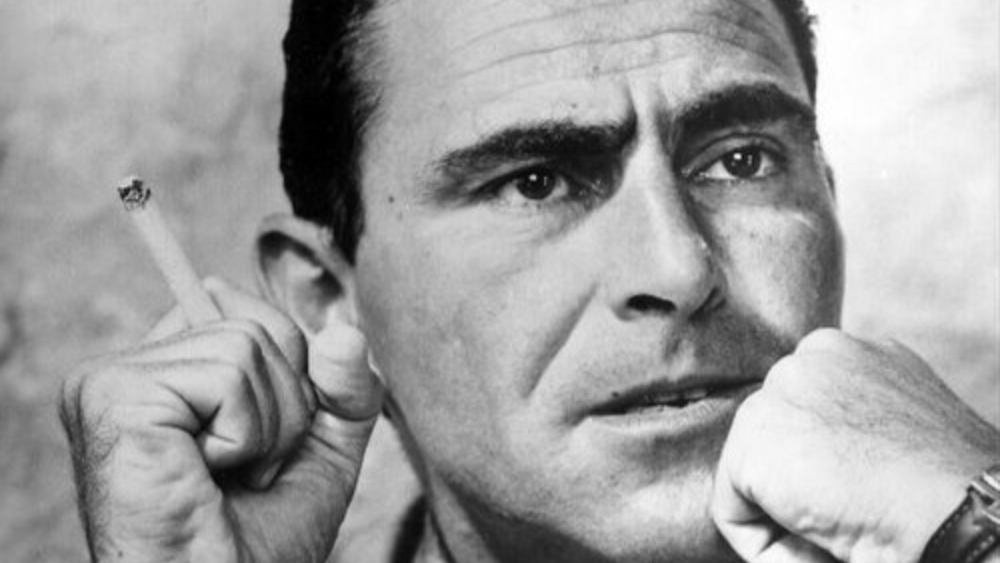
Rodman Edward Serling, known to the world simply as Rod Serling, was more than a prolific screenwriter and television producer—he was a visionary who reshaped the landscape of American television and left a lasting imprint on popular culture. Born on December 25, 1924, in Syracuse, New York, Serling’s early life was shaped by creativity, curiosity, and a keen sense of social awareness that would become hallmarks of his work. From his humble beginnings in a Jewish family to his storied career in radio, television, and teaching, Serling’s life reflects a relentless drive to explore human nature and challenge societal norms.
Early Life and Formative Years
Serling was the second of two sons born to Esther Cooper and Samuel Lawrence Serling. His father, initially a secretary and amateur inventor, eventually became a grocer and later a butcher after the Great Depression, while his older brother Robert J. Serling went on to become a novelist and aviation writer. In 1926, the Serling family moved 70 miles south to Binghamton, New York, where young Rod developed a fascination with performance. Encouraged by his parents, he acted in plays on a small stage his father built in the basement, often inviting neighborhood children to join. His early love for storytelling was evident even during long family car rides, when he would talk nonstop, oblivious to the silence around him.
School life revealed Serling’s precocious wit and intelligence. Though often labeled a class clown, he flourished when guided by teachers who recognized his potential. Encouraged by seventh-grade English teacher Helen Foley, he joined the debate team, contributed to the school newspaper, and became known as a budding social activist. His curiosity extended beyond academics—he excelled in tennis and table tennis, though his small stature kept him off the varsity football team.
Military Service and Its Influence
World War II interrupted Serling’s early educational pursuits. Graduating from Binghamton Central High School in 1943, he enlisted in the U.S. Army, following in the footsteps of his brother. Serving in the 511th Parachute Infantry Regiment of the 11th Airborne Division, Serling trained as a paratrooper and served in the Pacific Theater, seeing combat in New Guinea and the Philippines. His experiences in battle, particularly during the brutal Battle of Manila, shaped his worldview and deeply influenced his writing.
Serling witnessed the fragility of life firsthand, from friendly fire incidents to the tragic, accidental death of a fellow Jewish soldier, Melvin Levy. These experiences instilled in him a profound awareness of mortality and the moral complexities of war. His military service earned him the Purple Heart, Bronze Star, and Philippine Liberation Medal, among other honors. More importantly, it provided a reservoir of human drama that would later surface in his scripts, notably in episodes like The Purple Testament of The Twilight Zone.
Education and Early Career in Radio
After the war, Serling used the G.I. Bill to attend Antioch College in Yellow Springs, Ohio. Initially pursuing physical education, he gravitated toward literature and the theater, ultimately earning a Bachelor of Arts degree in 1950. At Antioch, he became deeply involved with the campus radio station, honing his skills in writing, directing, and acting in live broadcasts. Here, he met his future wife, Carol Kramer, marrying her in 1948, and together they would raise two daughters, Jodi and Anne.
Serling’s first professional writing credit came with the radio script To Live a Dream, winning him a trip to New York City and recognition from the popular radio program Dr. Christian. He continued working in radio, writing scripts for shows such as Adventure Express and Builders of Destiny. However, Serling grew increasingly disillusioned with the limitations of radio, criticizing its inability to fully explore human stories.

Breaking Into Television
The early 1950s marked a pivotal shift for Serling as he moved from radio to television, joining WKRC-TV in Cincinnati. There, he wrote scripts for local dramas, commercials, and experimental live broadcasts. His persistence paid off in 1955 with Patterns, a teleplay that became a nationwide sensation on Kraft Television Theatre. The story, which dramatized corporate power struggles, showcased Serling’s ability to combine compelling narrative with social commentary. Critics hailed it as a triumph, and the public’s enthusiastic response solidified his reputation as a writer of extraordinary skill and vision.
Following Patterns, Serling wrote Requiem for a Heavyweight for Playhouse 90, earning further acclaim. Yet, the early television industry posed significant challenges. Sponsors often censored or altered scripts to avoid controversy, forcing Serling to contend with restrictions on topics such as racism, war, and politics. Frustrated by these limitations, he sought a platform where he could freely explore socially relevant themes without compromise.
The Birth of The Twilight Zone
The solution came with the creation of The Twilight Zone, which premiered on CBS on October 2, 1959. Forming his own production company, Cayuga Productions, Serling ensured he retained creative control over the series. The Twilight Zone became a revolutionary anthology, blending science fiction, fantasy, and horror with pointed social commentary. Serling employed allegory and twist endings to address issues such as prejudice, conformity, war, and the human condition, often drawing on his own experiences in combat and society.
Over five seasons and 156 episodes, 92 of which Serling wrote himself, The Twilight Zone won critical acclaim and enduring popularity. Episodes like I Am the Night—Color Me Black tackled racial hatred, while others explored human resilience, ethics, and the unexpected consequences of our choices. Through the series, Serling achieved what he had long sought: a creative outlet unconstrained by corporate censorship, capable of challenging audiences to think deeply about morality, justice, and empathy.
Later Work: Night Gallery, Movies, and Teaching
After The Twilight Zone, Serling continued to innovate. In 1969, he launched Night Gallery, a horror and suspense anthology that combined his storytelling sensibilities with a new visual style. Though it included elements he disliked, such as comedic sketches, the series allowed him to explore darker themes and introduced a new generation to his work.
Serling also ventured into television movies, most notably A Carol for Another Christmas (1964), which reimagined Charles Dickens’ classic as a plea for global cooperation and peace. He made occasional acting appearances, hosted radio programs such as The Zero Hour, and even participated in creative experiments like Fantasy Park, a surreal “live” rock concert broadcast.
Beyond production, Serling was dedicated to teaching. He led seminars and courses at Antioch College, Ithaca College, and other institutions, guiding students in writing, media analysis, and storytelling. His mentorship shaped future writers and dramatists, emphasizing ethical responsibility and the power of narrative to illuminate the human experience.
Themes and Legacy
At the core of Serling’s work was an abiding compassion for humanity and an unflinching examination of societal issues. Antiwar, anti-racism, and pro-equality messages permeated his scripts, reflecting both personal experience and a desire to encourage moral reflection. His advocacy against the Vietnam War, support for progressive politicians, and use of television as a platform for social critique exemplify his commitment to civic engagement.
Serling’s writing is characterized by an enduring blend of imagination and realism. Whether addressing the horrors of war, corporate greed, or social injustice, he maintained a focus on the human element, exploring emotional truth, ethical dilemmas, and existential questions. His work has inspired countless writers, filmmakers, and thinkers, leaving a lasting mark on both popular culture and the television medium.
Conclusion
Rod Serling’s life was a testament to the power of storytelling. From a curious child performing on a basement stage to a decorated war veteran, from a struggling radio writer to the creator of one of television’s most iconic series, his journey reflects creativity, resilience, and moral courage. The Twilight Zone, Night Gallery, and his other works endure as reminders that imagination, when combined with conscience, can challenge audiences, provoke thought, and illuminate the complexities of life. Serling’s legacy is not only in the stories he told but in the way he used those stories to speak truth to power, confront injustice, and expand the horizons of human understanding.
Rod Serling passed away on June 28, 1975, but his vision continues to resonate, a timeless guide through the eerie, fantastical, and profoundly human corridors of The Twilight Zone.