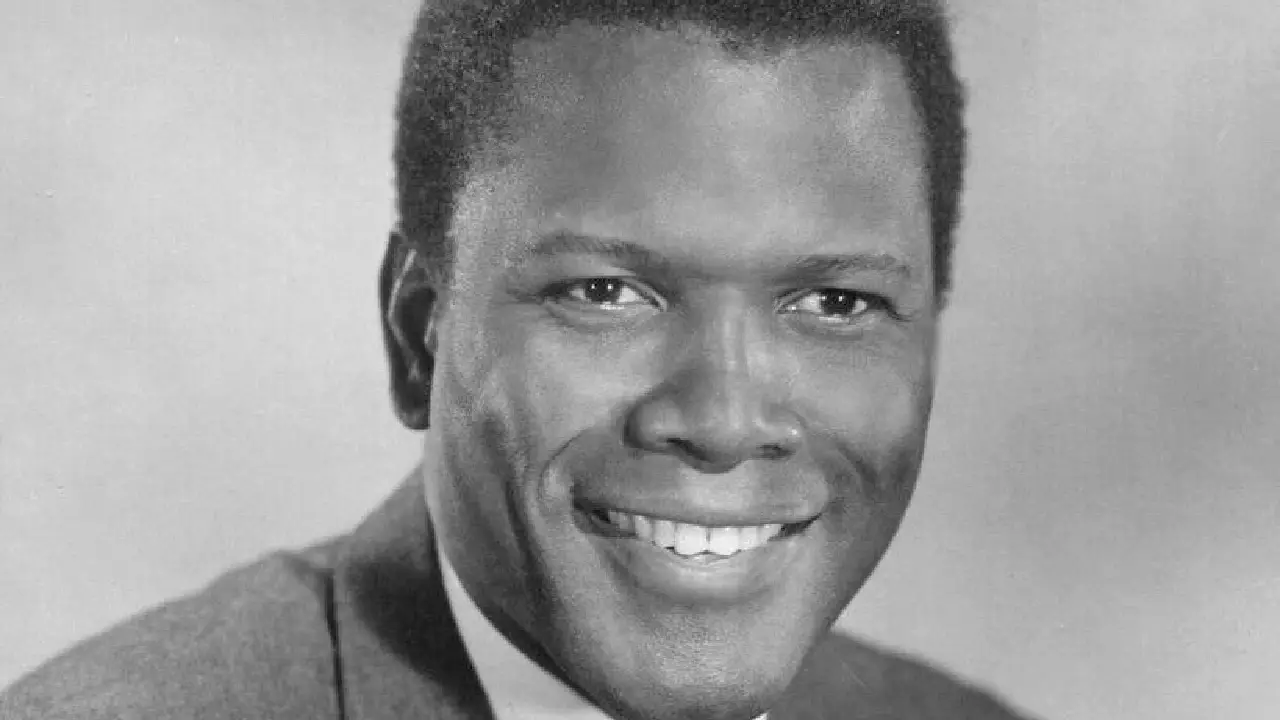
Sidney Poitier’s life reads like a quiet, powerful lesson in perseverance, dignity, and the slow reshaping of history. He did not arrive in the world of cinema polished or privileged. Instead, he came from humble beginnings, carrying with him the rhythms of the Bahamas, a fierce determination to survive, and an unshakable belief that his life could mean something more.
Born in Miami but raised in the Bahamas, Poitier grew up on Cat Island, a place defined by simplicity rather than opportunity. His early years were shaped by hard work, close family ties, and limited access to formal education. Life was honest and demanding, and like many children in rural communities, he learned responsibility early. There was little indication that this boy would one day stand on the grandest stages in Hollywood, let alone change them forever.
Leaving Home for New York City and Facing Harsh Reality
As a young man, Sidney Poitier made the bold decision to leave the Bahamas for New York City. The move came from hope, but reality hit hard. New York overwhelmed him. The noise, the relentless pace, and the pressure to survive in a massive city felt unlike anything he had ever known. Jobs were scarce, money was tighter, and the promise of opportunity often felt distant.
Audiences remember Sidney Poitier as a giant of American cinema, a man who walked through Hollywood doors locked for generations and forced them to stay open. What almost nobody in the public remembers is that before he ever faced a camera, he wore the uniform of the United States Army. Not as a celebrity. Not as a symbol. Just as another young man drafted into a system that did not particularly care who he was or what he might become.
For veterans, that detail matters. Not because it makes Poitier more famous, but because it makes him more familiar.
Sidney Poitier’s Army Service During World War II
The Army drafted Poitier in 1943, when he was just nineteen years old, into a segregated force defined by rigid racial lines. Military officials assigned him to the Army Medical Corps and stationed him at Northport Veterans Administration Hospital in Long Island, where he worked with psychiatric patients returning from the war. This was not the glamorous side of service. No parades. No headlines. Long shifts, wounded minds, broken bodies, and the quiet labor of helping other veterans survive the aftermath of combat.
He hated it.
That part is important too.
Poitier later admitted that he found the work overwhelming and that he struggled deeply with the discipline and the environment. At one point, he even feigned mental illness in an attempt to secure a discharge. The Army saw through the act. Doctors diagnosed him, treated him, and sent him back to duty. No heroic speech. No neatly packaged moral lesson. Just a young man trying to escape a situation he wasn’t prepared for, then learning—slowly and painfully—how to endure it.
For veterans, this is not weakness. This is honesty.
How Military Service Shaped Sidney Poitier’s Life and Career
He did his time and finished his service. He left the Army without medals or fanfare, carrying something far more complicated: an early education in human suffering, authority, and resilience. Those years working with damaged soldiers would quietly shape the rest of his life. When Poitier later played men confronting injustice, humiliation, rage, and dignity, he was not acting from theory. He had already seen what institutions do to people. He had already learned how thin the line is between stability and collapse.
There is a tendency to mythologize famous veterans. To turn service into a clean origin story. Poitier’s military record resists that. It is messy. Uncomfortable. Human.
He served in a segregated Army as a Black immigrant from the Bahamas, with limited formal education, surrounded by men broken by war, under officers who did not always see him as an equal. Poitier did not emerge as a war hero. He emerged as a man who understood power, suffering, and silence.
That understanding became the backbone of his career.
Why Sidney Poitier’s Military Experience Still Matters to Veterans
When Poitier stood on screen as a defiant prisoner, a wrongfully accused man, a professional forced to swallow insults, or a leader demanding respect, veterans recognized something familiar. Not heroics. Endurance. Self-control. The discipline of surviving inside systems you did not design and cannot escape.
His service did not make him a better actor in the technical sense. It made him a deeper one.
For today’s veterans, Poitier’s story offers a quiet kind of kinship. He did not love the Army and did not romanticize it. Poitier did not pretend it transformed him into something noble overnight. He simply served, struggled, finished, and carried those experiences forward into a life of consequence.
That is what most military service actually looks like.
Not banners. Not speeches. Just years that leave marks.
Sidney Poitier did not become great because he served. He became great because he learned, early on, how to stand upright in systems that try to bend you. That lesson begins in uniform for many people. For him, it never really ended.
And that, more than any award or statue, is why his military service still matters to veterans today.
Discovering Acting While Battling Rejection and Self-Doubt
Acting was not an obvious path, nor was it an easy one. Sidney Poitier struggled early on, particularly with reading and with his accent, which casting directors saw as a liability. Casting directors rejected him repeatedly and criticized him harshly. At times, opportunity seemed firmly out of reach.
But Poitier possessed a rare kind of patience. Rather than allowing rejection to harden him, he used it as fuel. He worked relentlessly on his craft, studying language, movement, and emotional truth. Slowly, his talent began to speak louder than the barriers placed before him.
The Breakout Role That Opened Hollywood’s Doors
His breakthrough came in 1955 with Blackboard Jungle. The role was significant not only for Poitier but for American cinema. It presented a Black character with depth, presence, and authority at a time when such portrayals were rare.
This performance marked the beginning of a long, upward climb. Poitier did not rise overnight. Instead, he built his career step by step, choosing roles that reflected intelligence, integrity, and humanity.
Winning an Oscar and Changing Film History Forever
In 1964, that climb reached a historic peak. Poitier won the Academy Award for Best Actor for his performance in Lilies of the Field, becoming the first Black actor to win a competitive Oscar for a leading role.
The moment was more than personal triumph. It was a breakthrough that reverberated across Hollywood and beyond. For audiences who had never seen someone like themselves honored in that way, Poitier’s win represented validation, hope, and possibility.

Defining a Generation Through Powerful and Timeless Performances
Throughout the 1960s and 1970s, Sidney Poitier became one of the most respected and influential stars in Hollywood. He starred in films audiences now consider classics, including In the Heat of the Night, which won the Academy Award for Best Picture in 1968.
His portrayal of Virgil Tibbs, a brilliant detective navigating overt racism with composure and intelligence, remains one of the most powerful performances in American film history. That same year, Guess Who’s Coming to Dinner confronted racial prejudice through the lens of family and love. Later films such as Uptown Saturday Night revealed his warmth and humor, while Sneakers introduced him to a new generation of viewers.
Choosing Integrity While Carrying the Weight of Representation
Behind the scenes, Sidney Poitier remained deeply aware of the responsibility he carried. He understood that each role helped shape how audiences saw Black men on screen. This awareness made him selective, sometimes turning down opportunities that conflicted with his values.
While this approach limited certain career paths, it ultimately defined his legacy. Poitier chose dignity and integrity, even when those choices came at a personal cost.
His Final Years, Personal Struggles, and an Enduring Legacy
In his later years, Sidney Poitier faced a quieter, more personal battle as he struggled with Alzheimer’s disease. On January 6, 2022, he passed away in Los Angeles at the age of 94.
Sidney Poitier’s life was never about spectacle. It was about steady courage, thoughtful choices, and the belief that representation matters. He did not force change through noise or outrage. Instead, he walked calmly into history, opening doors simply by refusing to accept the limits placed before him. His legacy lives on in every actor who dares to dream beyond expectations and in every audience member who finally sees themselves reflected on screen with dignity and truth.