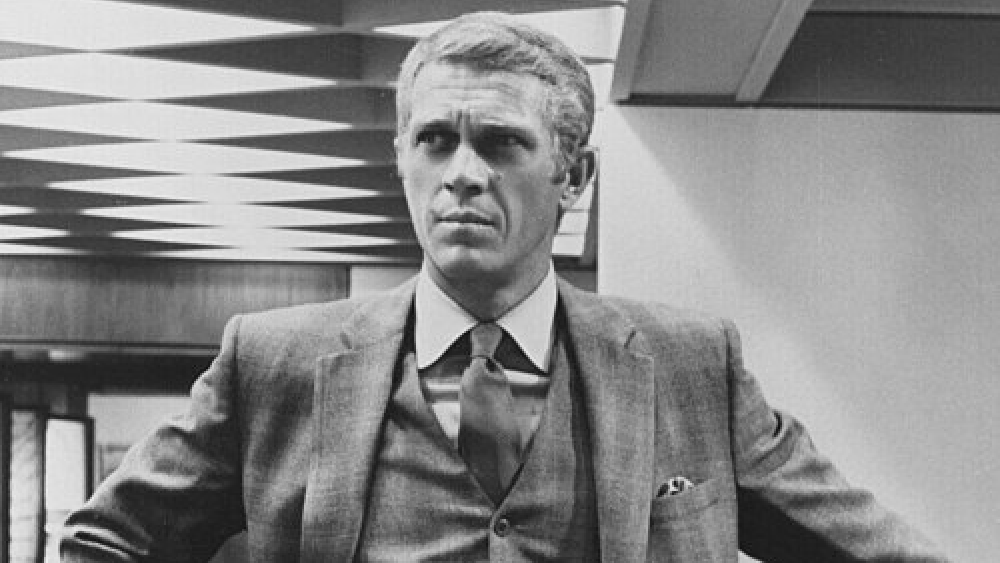
Terrence Stephen McQueen, born on March 24, 1930, in Beech Grove, Indiana, was not just an actor—he was an icon, a force of nature whose life mirrored the intensity and rebellion of the characters he portrayed. From the streets of Indianapolis to the glimmering stages of Hollywood, McQueen’s journey was as compelling as the films that immortalized him. Nicknamed the “King of Cool“, he embodied an antihero persona that resonated deeply during the turbulent 1960s, drawing audiences into the magnetic aura of his silent strength, daring spirit, and undeniable charm.
Early Life: A Childhood of Turmoil and Resilience
McQueen’s early years were marked by abandonment, struggle, and resilience. His father left shortly after his birth, and his mother, battling alcoholism, placed young Steve in the care of his grandparents in Missouri. Life on his great-uncle Claude’s farm provided a rare sense of stability and love, sparking his lifelong fascination with machines when Claude gifted him a red tricycle for his fourth birthday. Yet, this fleeting sanctuary gave way to hardship when Stephen McQueen returned to live with his mother and stepfather in Indianapolis. Dyslexic, partially deaf, and often beaten, the young McQueen fled to the streets at age nine, confronting a world that seemed determined to break him.
By 14, he had briefly joined a circus, drifted across states, and endured time in reform schools and a chain gang. His tumultuous youth forged the rebellious edge that would later define both his life and on-screen persona. The Marines offered a turning point. Enlisting at 17, Stephen McQueen confronted discipline, danger, and responsibility, saving fellow Marines in a daring Arctic rescue. It was in these formative years that he learned to channel his intensity, paving the way for the charisma and daring that would later captivate millions.
Rise to Stardom: From Television to Hollywood Icon
After the Marines, Stephen McQueen studied acting under the legendary Uta Hagen and Stella Adler in New York, learning to translate raw energy into compelling performance. Early roles on stage and minor film parts gave way to television success, most notably as bounty hunter Josh Randall in Wanted: Dead or Alive. His portrayal, defined by a unique combination of detachment and moral complexity, transformed McQueen into a household name, establishing the antihero archetype that would define his career.
The transition to film brought McQueen’s fearless spirit into full view. The Magnificent Seven (1960) and The Great Escape (1963) displayed his talent for commanding the screen with minimal dialogue, relying instead on nuanced gestures, piercing glances, and an unmistakable intensity. Whether shaking shotgun cartridges beside his ear or navigating high-stakes motorcycle chases, McQueen infused his roles with authenticity and daring that audiences could feel in their bones.
The 1960s and 1970s: Peak Stardom and Personal Battles
The mid-1960s through the 1970s were McQueen’s golden era. Films like The Cincinnati Kid, The Sand Pebbles—for which he earned an Academy Award nomination—Bullitt, and The Thomas Crown Affair cemented his status as a superstar. McQueen’s insistence on performing his own stunts, particularly the legendary car chase in Bullitt, blurred the line between actor and adventurer. He was not merely portraying a hero; he was living it, racing through life with a fearless authenticity that few could emulate.
Yet fame came with its own shadows. Stephen McQueen was combative with directors, navigating the Hollywood system on his own terms, and he turned down iconic roles in films like Breakfast at Tiffany’s, Butch Cassidy and the Sundance Kid, and Close Encounters of the Third Kind. His refusal to compromise, whether for creative control or personal loyalty, underscored a life lived at the edge, one that refused the safety of conventionality.

A Life Fueled by Speed and Adventure
McQueen’s love of speed extended far beyond the screen. He raced motorcycles and cars under the alias “Harvey Mushman,” competed in off-road events like the Baja 1000, and even co-drove in prestigious racing events such as the 12 Hours of Sebring. Stephen McQueen owned a remarkable collection of classic cars and motorcycles, each representing a facet of his untamed spirit. Whether flying planes, racing across deserts, or performing stunts, McQueen’s life was an extension of the kinetic energy and relentless drive that defined his cinematic roles.
Personal Life: Love, Loss, and Faith
McQueen’s personal life reflected the same intensity. Married three times, he shared his heart with Neile Adams, Ali MacGraw, and Barbara Minty, and fathered two children, Chad and Terry. Love, like his career, was passionate, sometimes tumultuous, and deeply human. Later in life, McQueen embraced evangelical Christianity, seeking meaning and peace as his body succumbed to the illness that would ultimately claim him.
Final Years and Legacy
Diagnosed with terminal mesothelioma in 1979, McQueen sought unconventional treatment in Mexico, determined to fight against the odds. On November 7, 1980, at the age of 50, he passed away following surgery—a heart attack that marked the end of a life lived at full throttle. McQueen’s legacy endures not only in his films but in the indelible mark he left on popular culture: the embodiment of cool, courage, and uncompromising individuality. He remains a symbol of the antihero, the rebel, and the man who dared to live life on his own terms, thrilling audiences and inspiring generations.
Stephen McQueen’s story is one of contrasts—fierce independence tempered by vulnerability, calculated risk balanced with raw instinct, cinematic legend fused with human complexity. It is a reminder that greatness often arises from struggle, and that true charisma lies in authenticity, daring, and an unwavering commitment to living boldly.