There are moments in life when strength feels distant.
For some veterans and their families, those moments arrive quietly. For others, they arrive all at once. What matters most is knowing that when crisis comes, you are not alone — and help is not far away.
The Veterans Crisis Line exists for exactly that reason.
- It is not complicated.
- It is not bureaucratic.
- It is not conditional.
- It is immediate.
What is 988: A Direct Line to Support
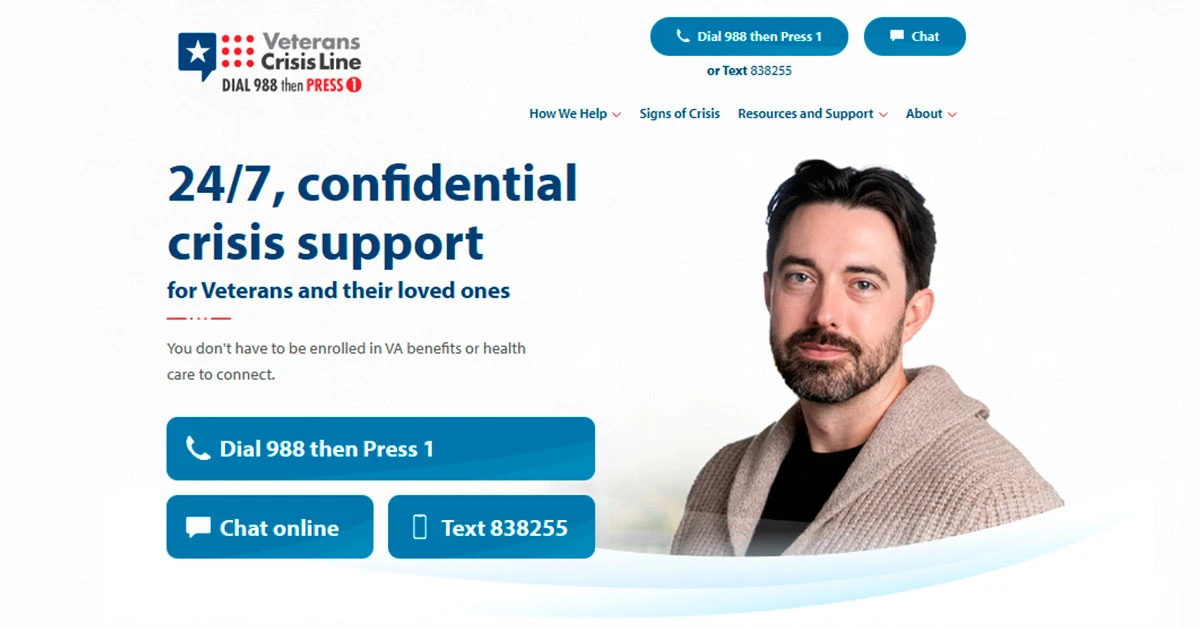
The Veterans Crisis Line provides 24/7, confidential crisis support for Veterans, service members, National Guard and Reserve members, and their loved ones .
- You do not have to be enrolled in VA health care.
- You do not have to receive VA benefits.
- You do not have to explain your entire history before someone listens.
If you or someone you care about is in crisis:
- Dial 988 and Press 1
- Text 838255
- Or connect through online chat at the Veterans Crisis Line website
When you call, you are connected to a real, qualified responder trained to support veterans. The call is free and confidential. You decide how much information to share. And support does not end with the conversation — responders help connect you to additional resources if needed.
For veterans, that clarity matters.
In a moment of overwhelm, simple instructions save lives.
Crisis Does Not Always Look Dramatic
Crisis is not always loud. It can look like:
- Withdrawal
- Sudden anger
- Hopeless statements
- Risk-taking behavior
- Increased substance use
- A veteran giving away personal belongings
- A quiet loss of purpose
Family members often see it first.
Spouses. Parents. Adult children. Close friends.
If you are concerned about a veteran in your life, you can call 988 as well. The Veterans Crisis Line serves those who support veterans, not only veterans themselves .
Asking for help is not weakness.
Calling for someone else is not betrayal.
It is protection.
During Business Hours: Virginia Veteran and Family Support (VVFS)
While 988 is for urgent or immediate crisis, there are also times when a veteran or family member needs structured support — housing help, financial coordination, behavioral health referrals, healthcare navigation, or peer recovery support.
That is where the Virginia Veteran and Family Support Program (VVFS) comes in.
According to the Virginia Department of Veterans Services, VVFS works in cooperation with the Department of Behavioral Health and Developmental Services and the Department for Aging and Rehabilitative Services to coordinate behavioral health, rehabilitative services, and community resources for veterans and their families .
VVFS provides:
- Assessment of individual and family needs
- Linkages to medical and behavioral health services
- Housing and utility assistance resources
- Employment and education support
- Financial and benefits coordination
- Outreach to justice-involved veterans
- Individual and group peer recovery support
They proudly serve:
- Veterans of any era who are Virginia residents, regardless of discharge status
- Members of the Virginia National Guard
- Members of the Armed Forces Reserves
- Transitioning service members
- Family members and caregivers
VVFS is not a hotline. It is a coordinated support system.
And permission matters.
It is best if veterans or family members reach out directly so VVFS has clear consent to assist.
There are two ways to request support:
Online Intake Form:
https://vvn.dvs.virginia.gov/form/VVFSIntakeForm
Phone:
844-838-7838
That same number also connects to the Virginia Department of Veterans Services main office .
Crisis is urgent.
Recovery is structured.
Both are necessary.
Suicide Prevention Training: Building a Community That Notices
Prevention does not start in a crisis. It starts long before.
The organization LivingWorks offers suicide prevention training designed to equip everyday people — not just clinicians — with the tools to recognize and respond when someone may be thinking about suicide.
Two programs are especially relevant.
safeTALK
LivingWorks safeTALK is a shorter training designed to help participants recognize the signs of suicidal thinking and connect individuals to appropriate help. It is practical, accessible, and designed for community members who want to be prepared.
This training is offered by an organization that also serves as an SOS grantee.
safeTALK teaches people to notice, ask directly about suicide, and connect someone to further support.
It does not turn participants into therapists.
It turns them into aware and prepared community members.
For many workplaces, faith groups, veteran organizations, and civic groups, safeTALK is realistic and manageable.
ASIST (Applied Suicide Intervention Skills Training)
The Applied Suicide Intervention Skills Training (ASIST) is a more in-depth, two-day program.
It teaches participants how to:
- Recognize when someone may be at risk
- Conduct a suicide intervention
- Create a safety plan
- Stay present during critical conversations
ASIST is considered one of the gold standards in suicide intervention training.
We strongly recommend ASIST whenever possible.
At the same time, we understand the reality many veterans and family members face. Taking two full days off from work is not always easy — especially for those balancing employment, caregiving, or financial strain.
If ASIST is not feasible right now, safeTALK is still a meaningful step.
Prepared communities save lives.
A Clear Path Forward
If the need is immediate:
Dial 988 and Press 1.
Or text 838255.
If support is needed during business hours in Virginia for housing, financial coordination, behavioral health, healthcare navigation, or peer recovery:
- Complete the intake form: https://vvn.dvs.virginia.gov/form/VVFSIntakeForm
- Or call 844-838-7838
If you want to strengthen your community’s ability to respond before crisis escalates:
- Consider LivingWorks safeTALK
- Pursue ASIST when feasible
None of these steps are dramatic.
They are disciplined.
And discipline — the habit of reaching for help instead of retreating from it — saves lives.
No Veteran Stands Alone
Military service leaves marks.
Some are visible.
Many are not.
There is no shame and no failure in calling 988. Don’t think is weak filling out an intake form. There is no embarrassment in attending a suicide prevention training.
There is only responsibility — to yourself, to your family, and to the men and women who once stood beside you.
Help exists.
Use it.
And if you see someone struggling, do not wait.
Call. Reach out. Ask.
That conversation may be the one that changes everything.