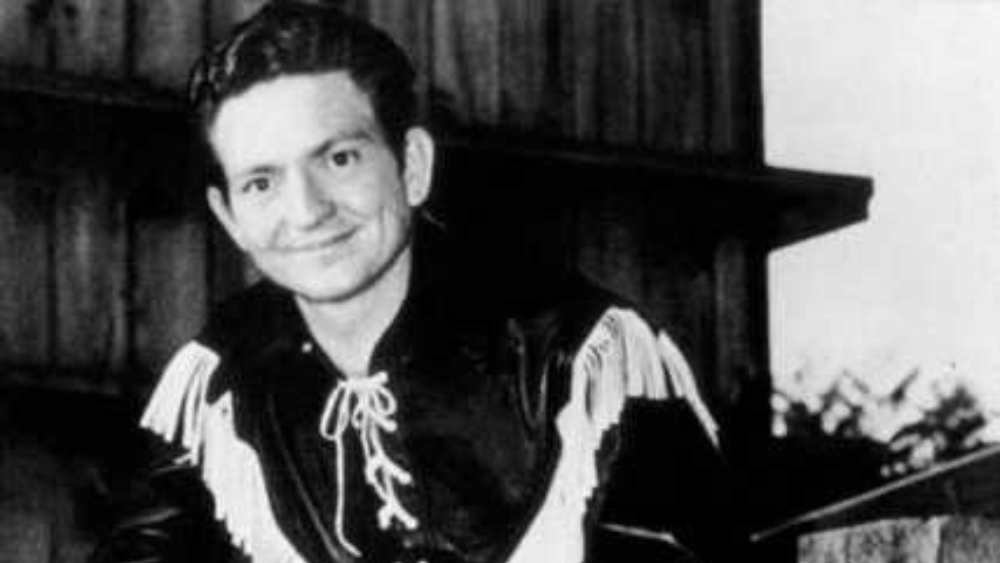
Willie Hugh Nelson was born on April 29, 1933, in the small farming town of Abbott, Texas—a place where hard work, faith, and music shaped everyday life. From these humble beginnings emerged a man who would not only redefine country music but also become one of America’s most enduring cultural figures. Willie Nelson’s story is not about overnight success; it is about resilience, independence, and an unwavering commitment to authenticity.
Roots in Texas: Music as a Lifeline
Raised by his grandparents after his parents left, Willie found stability and love through music. His grandfather bought him a guitar at age six and taught him a handful of chords. That simple gift changed everything. Willie wrote his first song at seven and was performing publicly before most children his age knew what they wanted to be.
Music filled his childhood—gospel songs at church with his sister Bobbie, polka tunes with local bands, and country records spinning at home. While other kids spent summers playing, Willie picked cotton under the Texas sun. He hated the work but discovered he could earn better money singing in honky-tonks. By his teenage years, he already understood that music wasn’t just passion—it was survival.
A Young Man Searching for His Place
After graduating from high school, Willie joined the U.S. Air Force but was medically discharged due to back problems. He briefly attended Baylor University to study agriculture, but music kept calling him away. He worked wherever he could—radio disc jockey, tree trimmer, nightclub bouncer—always squeezing in time to write songs and perform at night.
In the late 1950s, Willie moved frequently, chasing opportunity and sleeping wherever he could. He worked radio stations across Texas and the Pacific Northwest while quietly building a catalog of songs that would later become legendary. During this period, he wrote “Funny How Time Slips Away,” “Hello Walls,” “Pretty Paper,” and “Crazy”—songs that would soon define country music, even if his own career hadn’t yet taken off.
Nashville: Success as a Songwriter, Frustration as an Artist
In 1960, Willie arrived in Nashville with hope and determination. He struggled to land a recording contract, but his songwriting quickly caught attention. When Patsy Cline recorded “Crazy,” it became one of the biggest jukebox hits of all time. Other artists followed, turning Willie into one of the most sought-after songwriters in town.
Yet Nashville didn’t quite know what to do with Willie the performer. His voice was unconventional, his phrasing behind the beat, his look unpolished. Though he released albums and joined the Grand Ole Opry, his records rarely matched the success of his compositions. Over time, the rigid expectations of the Nashville sound wore him down.
Leaving Nashville and Finding Freedom in Texas
By the early 1970s, Willie was exhausted and disillusioned. After a fire destroyed his Tennessee ranch, he took it as a sign to change direction. He returned to Texas, settling in Austin, where a thriving music scene welcomed creativity over conformity.
Austin transformed Willie. Playing regularly at the Armadillo World Headquarters, he found an audience that embraced his blend of country, folk, jazz, and blues. In 1973, Shotgun Willie marked a turning point—a bold departure from Nashville polish. It didn’t sell huge numbers at first, but it cleared Willie’s creative throat.
The Birth of Outlaw Country
Willie’s next albums cemented his place in history. Red Headed Stranger (1975), a sparse and haunting concept album, became a massive success despite initial resistance from his record label. Its breakout single, “Blue Eyes Crying in the Rain,” gave Willie his first number-one hit as a singer.
Alongside Waylon Jennings, Johnny Cash, and Kris Kristofferson, Willie became a central figure in outlaw country—a movement that rejected Nashville’s rules in favor of artistic control. Albums like Wanted! The Outlaws made history, while Willie’s laid-back defiance reshaped the genre.
Stardom, Supergroups, and Cultural Impact
The late 1970s and 1980s brought Willie widespread fame. Albums like Stardust showcased his ability to reinterpret American standards, while hits like “On the Road Again” and “Always on My Mind” turned him into a crossover superstar.
He joined The Highwaymen with Jennings, Cash, and Kristofferson, forming one of the most iconic supergroups in music history. During this era, Willie also became a familiar face in film, starring in movies like The Electric Horseman and Red Headed Stranger, further expanding his cultural reach.
The IRS Battle and Unbreakable Resilience
In 1990, Willie Nelson faced one of the biggest challenges of his life when the IRS seized his assets, claiming he owed $32 million in unpaid taxes. Instead of disappearing, Willie confronted the crisis with humor and honesty. He released The IRS Tapes: Who’ll Buy My Memories?, auctioned possessions, and ultimately paid off his debt.
The episode only strengthened his legend—proof that even at his lowest point, Willie remained resilient, creative, and true to himself.
Activism, Advocacy, and Living His Values
Beyond music, Willie has long stood up for causes close to his heart. In 1985, he co-founded Farm Aid to support American farmers, a mission he continues decades later. He became a leading advocate for marijuana legalization, environmental sustainability, and biofuels, often using his platform to challenge outdated systems.
Willie’s activism has never felt forced. It reflects the same independence and compassion found in his music.
Trigger, Legacy, and the Road Ahead
At Willie’s side through it all is Trigger, his weathered Martin guitar, scarred by decades of constant strumming. Like Willie, Trigger tells a story of endurance, travel, and survival.
Now in his 90s, Willie Nelson continues to tour, record, collaborate, and speak out. His voice carries the weight of a life fully lived, and his presence reminds us that success doesn’t come from fitting in—it comes from staying true.
Willie Nelson is more than a musician. He is a living symbol of freedom, honesty, and the timeless power of song.