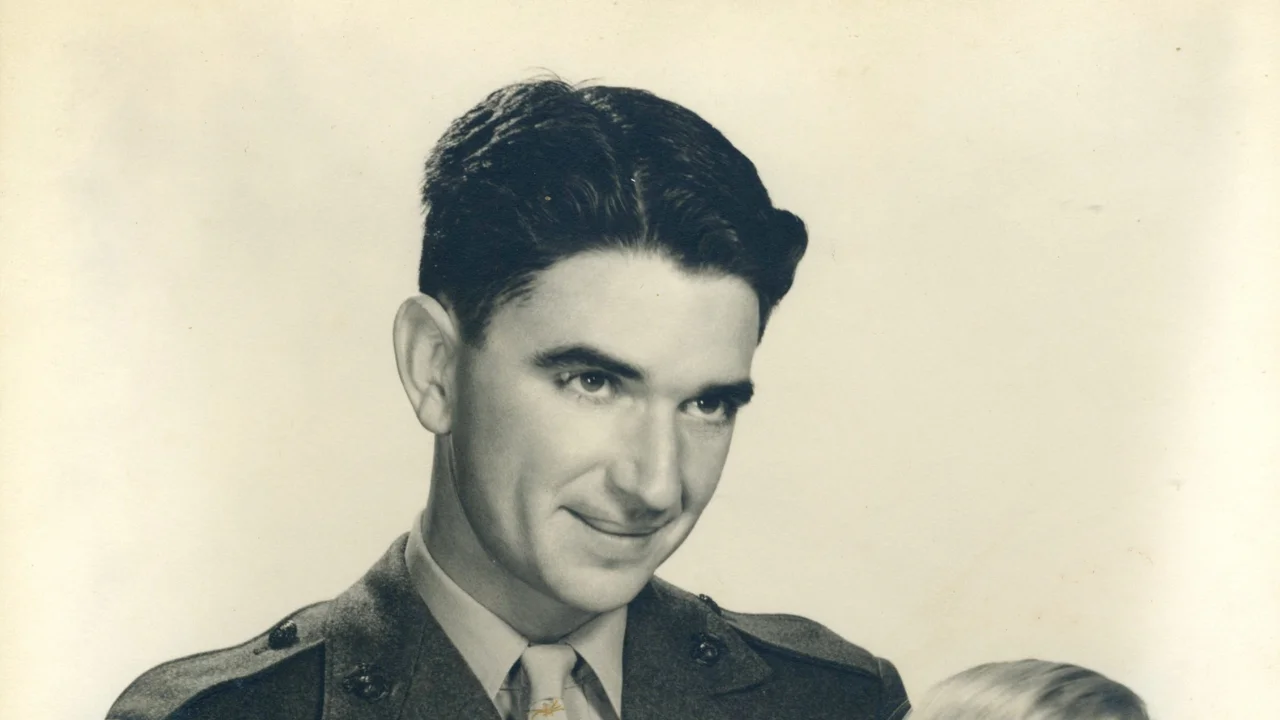
Some legends are built on loud moments. Carlos Norman Hathcock II was built on something quieter—patience, discipline, and the kind of focus that turns chaos into a single clear decision. In Vietnam, he became known as the “White Feather,” a name spoken by enemies and Marines alike, not as a boast, but as a warning.
He wasn’t just a sniper. He was a Marine who carried the weight of responsibility the way many veterans recognize instantly: If I don’t do my job, my brothers don’t come home.
A Poor Kid With a Rifle and a Dream
Hathcock was born in Little Rock, Arkansas (1942) and grew up in Wynne.
He hunted young—partly because he enjoyed it, partly because his family needed it. As a boy, he’d head into the woods with a dog and a rifle, pretending to be a soldier. Even then, the direction of his life was set: he wanted to be a Marine.
On his 17th birthday, May 20, 1959, he enlisted. Years later, he married Josephine “Jo” Bryan, and they had a son. Behind every “legend” headline, there was still a family at home, doing what military families always do.
From Competition Shooter to Combat Sniper
Before Vietnam, Hathcock had already proven himself on the range, winning major shooting competitions including the Wimbledon Cup at Camp Perry—one of the most prestigious long-range shooting prizes.
In 1966, he deployed to Vietnam first as a military policeman, then moved into sniper work as the Marine Corps pushed to develop snipers at the platoon level.
This is where the story shifts from talent to responsibility. Because in war, skill isn’t a trophy. It’s a tool.
“White Feather” and the Cost of Being Seen
Hathcock wore a white feather in his hat band. The Viet Cong and PAVN reportedly called him “White Feather” and enemy snipers were sent specifically to hunt him.
Marines in his area sometimes wore white feathers too.
This was deliberately draw attention and confuse counter-snipers, because they knew what his loss would mean.
That detail matters to veterans: the mission is never just one person. Even when one person becomes famous, the team still moves as one.
One Shot, One Kill… and the Truth Behind It
Hathcock is credited with 93 confirmed kills in Vietnam, and the file notes how confirmation was difficult because it required a spotter and an officer—something snipers often didn’t have behind enemy lines.
Some of the most repeated stories about Hathcock involve extreme precision and “impossible” shots—like the famous account of shooting an enemy sniper through the scope. The article also mentions disputed or debated claims, including skepticism by scholars regarding the story of a female Viet Cong leader known as “the Apache woman.” That’s worth acknowledging with honesty: combat history can blur where memory, myth, and documentation overlap.
What doesn’t blur is the mindset veterans recognize: the kind of concentration that blocks out everything except the job in front of you. Hathcock described it as “getting in the bubble”—a state of absolute focus where every breeze and movement matters.
The Day He Stopped Being a Sniper
On September 16, 1969, an LVTP-5 he was riding on hit an anti-tank mine. The vehicle was engulfed in flames. Hathcock pulled seven Marines from the burning wreck, suffering severe burns himself. He received the Purple Heart, and decades later he was awarded the Silver Star for that rescue.
This is the part of the story that often gets overlooked: not the marksman, but the Marine—running back into fire because somebody might still be inside.
After the War: Pain, Purpose, and Teaching the Next Generation
Back in the U.S., Hathcock helped establish the Marine Corps Scout Sniper School at Quantico. Even while living with constant pain from his injuries, he kept teaching. Later, his health deteriorated and he was diagnosed with multiple sclerosis. He was medically separated just short of 20 years of service—close enough to taste the finish line, but not close enough to reach it the way he wanted.
The file describes a period of depression and how he eventually found ways to cope, including shark fishing. He also provided sniper instruction to police departments and select military units.
“It Was the Hunt, Not the Killing”
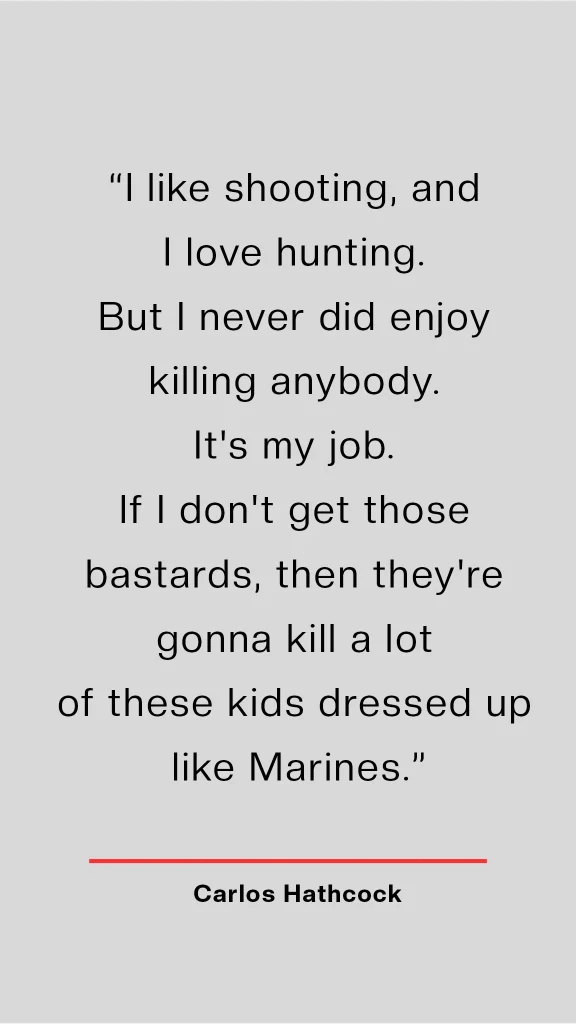
Hathcock’s own words matter here, because they cut through the stereotypes people attach to snipers. He spoke about duty, about protecting Marines, and about how the mission was never about enjoying death. He died in 1999 from complications related to multiple sclerosis, but his legacy continued—in the school he helped build, in the ranges named for him, and in the Marines who carried forward what he taught.
Legacy That Still Speaks to Veterans
Carlos Hathcock is remembered for precision, yes. But his deeper legacy is discipline under pressure, loyalty in the worst conditions, and the quiet truth many veterans carry:You don’t do the job because it’s glamorous.
You do it because someone has to.
Need support in Virginia?
Virginia Veteran and Family Support (VVFS) helps veterans and families connect with housing, financial assistance, healthcare, behavioral health services, and peer support. Learn more or request help here.