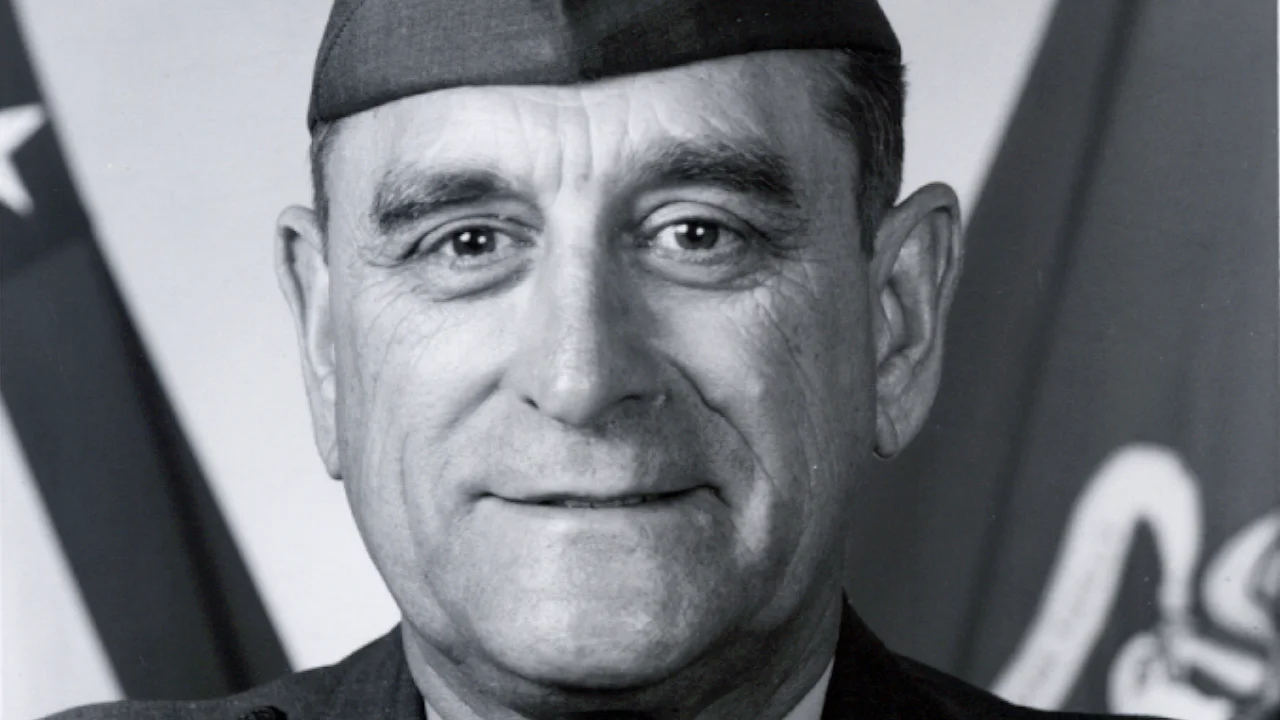
Some veterans build their legacy in a single defining moment. Major General James L. Day built his across a lifetime—rising from an enlisted Marine in World War II to a general officer after decades of leadership, combat, and sacrifice. His story is one of grit, humility, and the kind of battlefield courage that doesn’t ask to be remembered—but deserves to be.
Day served in World War II, the Korean War, and the Vietnam War, earning the Medal of Honor, three Silver Stars, and six Purple Hearts over a career that spanned more than 40 years.
Early Life: East St. Louis Roots and a Call to Serve
James Lewis Day was born on October 5, 1925, in East St. Louis, Illinois. Later, he earned both a Bachelor of Science in political science and an MBA, achievements that would complement a life defined by leadership.
But before the degrees, before the rank, and long before national recognition.
James L Day made a decision that would shape everything: he enlisted in the United States Marine Corps in 1943.
James L. Day’s World War II Service: Marshall Islands, Guam, and Okinawa
During World War II, Day saw combat in the Marshall Islands, Guam, and Okinawa.
These campaigns where the Marines were asked to fight forward, often against deeply entrenched enemy positions.
It was on Okinawa, during the brutal fight for Sugar Loaf Hill, that Day’s name became tied to one of the most extraordinary acts of small-unit leadership in Marine Corps history.
Medal of Honor Action on Okinawa: “He Yielded No Ground”
From May 14–17, 1945, Corporal James L. Day served as a squad leader with Weapons Company, 2nd Battalion, 22nd Marines, 6th Marine Division. Over three days of sustained combat, he rallied Marines, held a forward position under relentless attack, and repeatedly exposed himself to enemy fire to protect others.
According to the Medal of Honor citation, Day’s position endured intense mortar and artillery fire followed by repeated ground assaults—including a major attack by roughly forty Japanese soldiers.
Even after suffering significant losses and being wounded, he continued to lead, repulse night attacks, and escort wounded Marines to safety—one at a time—through heavy fire.
The citation emphasizes a powerful detail: Day yielded no ground, and by the end, more than 100 enemy dead were counted around his position. In those days, holding the line was not a metaphor—it was the difference between survival and collapse.
Why the Medal of Honor Was Awarded Decades Later
Day’s Medal of Honor story includes something many veterans recognize: the chaos of war doesn’t always preserve records the way history wishes it would.
Although he was nominated during the battle, the paperwork reportedly disappeared amid the heavy casualties and lost reports. Years later, carbon copies resurfaced, and the process slowly restarted.
Day himself reportedly resisted efforts to pursue the award—especially later in his career—because he believed seeking such recognition could set the wrong example for those he led. That humility says a lot about who he was.
Ultimately, President Bill Clinton presented the Medal of Honor to Major General Day at the White House on January 20, 1998.
More than fifty years after Okinawa.

Korean War: Reconnaissance Leadership and Two Silver Stars
In September 1952, Day completed The Basic School in Quantico and was sent to Korea.
He served with Company C, 1st Battalion, 7th Marines and the 1st Reconnaissance Company.
There, he earned two Silver Stars, recognized for conspicuous gallantry while leading patrol actions under intense pressure and while wounded.
Yet still maintaining control of his men and refusing treatment until others were safe.
For many Marines, Korea was a different kind of hardship than the Pacific: bitter conditions, grinding patrols, and constant uncertainty. Day’s record shows he didn’t just endure it—he led through it.
Vietnam War: Battalion Command Under Fire and a Third Silver Star
Day served in Vietnam in two periods, including a first tour beginning in April 1966 as commanding officer of 1st Battalion, 9th Marines, 3rd Marine Division.
He was awarded his third Silver Star for actions during Operation Prairie II (March 2–4, 1967) near the Demilitarized Zone.
The citation describes him repeatedly moving forward under heavy mortar, rocket, and automatic weapons fire—directing assaults, repositioning companies, and pressing the mission despite casualties and later a serious back injury from a mortar round.
The details matter because they show the kind of leadership Marines trust: not from behind a map table, but out where the danger is real and decisions cost lives.
A Career That Rose From Enlisted Marine to Major General
Day’s service years ran from 1943 to 1986, ending with retirement at the rank of major general. Over the decades he held a wide range of command and senior leadership roles, including:
- Commanding officer roles and operational billets across training and infantry units
- Senior leadership at Marine Corps Recruit Depot San Diego
- Commanding General of the 1st Marine Division and assignment as Commanding General, I Marine Amphibious Force
When President Clinton honored him, he described Day as one of the greatest “mustangs” the Marine Corps produced.
Someone who rose from enlisted ranks to general officer through merit, courage, and service.
Awards and Recognition: Valor Marked by Sacrifice
Day’s awards include:
- Medal of Honor
- Silver Star (three awards)
- Navy Distinguished Service Medal
- Six Purple Hearts
- Additional decorations reflecting decades of combat and leadership
One line in the biography is especially striking: Day is believed to be the only Marine infantryman wounded and decorated for valor in all three wars—World War II, Korea, and Vietnam.
That combination is rare not just because of the timeline, but because it reflects a life that repeatedly returned to the hardest work the Corps asks of its Marines.
Death and Legacy: A Name Still Carried Forward
James L. Day died of a heart attack on October 28, 1998, in Cathedral City, California, and was buried at Fort Rosecrans National Cemetery in San Diego.
His legacy continues in public remembrance, including a middle school named in his honor and recognition associated with Medal of Honor recipients.
But beyond monuments, his deeper legacy is one veterans understand instinctively: the quiet commitment to the job, the refusal to give up ground, and the kind of leadership that puts others first—even when no one is watching.
Why James L. Day Still Matters to Veterans Today
Day’s story isn’t just about extraordinary bravery. It’s about the long arc of service:
- A young Marine corporal holding the line under impossible pressure
- A reconnaissance officer leading wounded patrols in Korea
- A battalion commander in Vietnam directing men through heavy fire
- A general officer shaping Marines, training, and readiness for those who would fight after him
In every era, he showed the same core: discipline, courage, and responsibility. The kind that doesn’t need applause to exist—but earns it anyway.
If you’d like, send the next veteran file and I’ll write it in the same Words of Veterans format (hook → early life → military service → defining actions → legacy).
Need support in Virginia?
Virginia Veteran and Family Support (VVFS) helps veterans and families connect with housing, financial assistance, healthcare, behavioral health services, and peer support. Learn more or request help here.