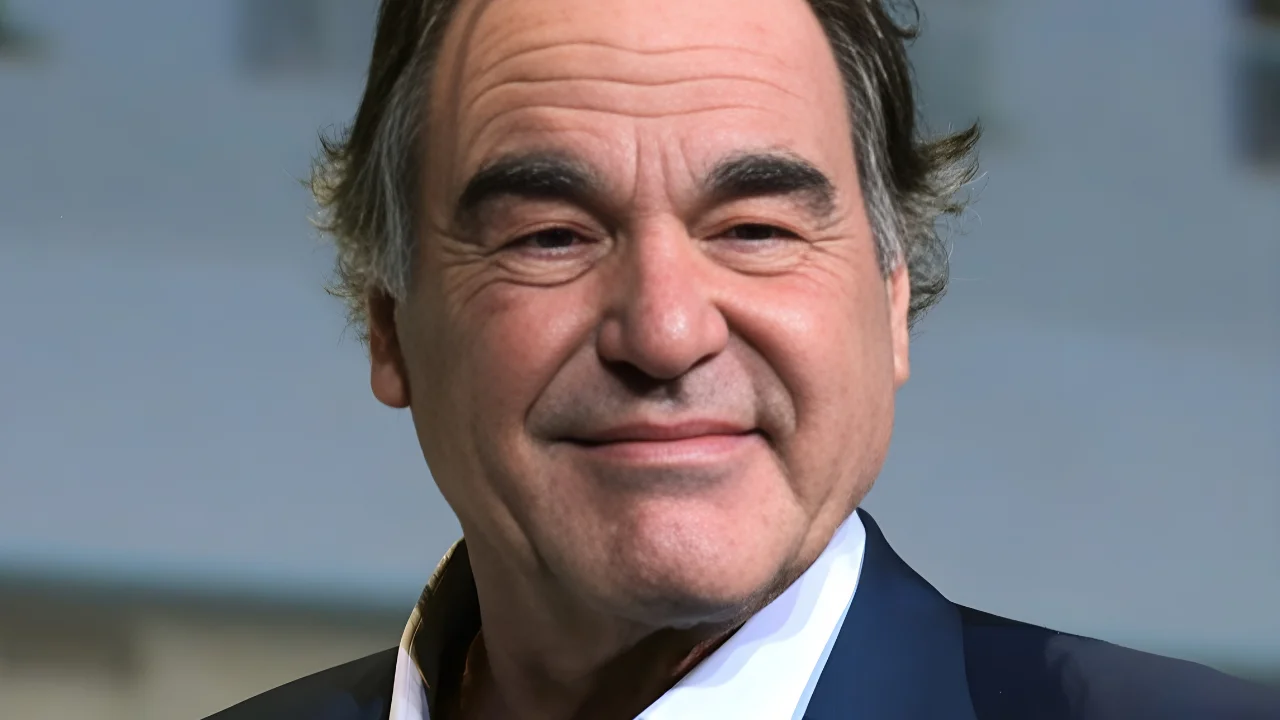
William Oliver Stone is a name synonymous with cinematic power, known for tackling some of the most controversial and contentious issues in modern American history. But long before he was an acclaimed, three-time Academy Award-winning director, he was an infantryman navigating the brutal realities of the Vietnam War. For many veterans, Stone’s journey—from the battlefields of Southeast Asia to the heights of Hollywood, all while battling the invisible wounds of war—is a profound testament to the resilience of the human spirit.
Early Life and the Call to Serve
Born on September 15, 1946, in New York City, Stone grew up under the heavy influence of his father, a World War II veteran and successful stockbroker. Despite a privileged upbringing and admission to Yale University, Stone felt lost and battled severe depression during his early years. Searching for purpose, he dropped out of Yale at age 18 to teach English to high school students in Saigon, South Vietnam, and later worked as a wiper on a United States Merchant Marine ship.
However, the war in Vietnam continued to escalate, and Stone felt compelled to experience it firsthand.
- In April 1967, Stone enlisted in the United States Army.
- He specifically requested combat duty in Vietnam.
- He first served as an infantryman with the 2nd Platoon, B Company, 3rd Battalion, 22nd Infantry Regiment, 25th Infantry Division.
The Brutal Reality of Combat
Stone’s time in Vietnam was marked by intense combat and near-fatal encounters. He did not watch the war from a distance; he lived it in the mud and the blood.
- In October 1967, he was medevaced for the first time after being shot in the neck during a night ambush.
- This wound nearly severed his jugular vein and carotid artery, a survival he later described as a “miracle”.
- During the New Year’s Battle of 1968, he was knocked unconscious and suffered a perforated eardrum from the concussive blast of a beehive round, causing permanent deafness in that ear.
- On January 15, 1968, while attempting to aid other injured personnel, a detonated satchel charge caused a blast concussion and shrapnel wounds to his legs and buttocks.
Despite his injuries, Stone emphatically declined a noncombat transfer arranged by his father through government connections, choosing instead to stay in the Army and complete his combat tour. Following a hospital stay, he was transferred to the 1st Cavalry Division, participating in long-range reconnaissance patrols. His bravery was undeniable; during a crossfire firefight near My Khe beach in August 1968, Stone charged and killed a North Vietnamese sniper who had several squads pinned down. This action earned him the Bronze Star with “V” Device for heroism in ground combat.
By the time he was separated from active duty in November 1968, his military awards included a Purple Heart with an Oak Leaf Cluster to denote his two hospitalized wounds, the Combat Infantryman Badge, and an Air Medal, among numerous other honors.
The Invisible Wounds and the Return Home
Like many who returned from Vietnam, Stone found that leaving the combat zone did not mean leaving the war behind. The transition back to civilian life was jarring and deeply painful.
- Following the war, Stone suffered from post-traumatic stress disorder (PTSD).
- His feelings of depression and isolation were worsened by the indifferent attitude the general public held toward returning veterans.
- He reflected that his experiences as a combat veteran alienated him from his generation and, later, from Hollywood.
- He also endured long-term physical complications, including combat-induced hearing loss, tinnitus, and minor discomfort from shrapnel still embedded in his body.
Turning Trauma into Truth on the Screen
Rather than letting his experiences destroy him, Stone channeled his trauma into his art. Utilizing the G.I. Bill, he attended New York University, graduating with a Bachelor of Fine Arts degree in film in 1971. His service in Vietnam became the foundational bedrock for his stark, unvarnished portrayals of war and its aftermath.
Stone broke through as a screenwriter—winning an Academy Award for Midnight Express—before directing his seminal Vietnam War drama, Platoon, in 1986. Based heavily on his own combat experiences, Platoon won rave reviews, massive commercial success, and Academy Awards for Best Picture and Best Director. He followed this to complete an unofficial Vietnam trilogy: Born on the Fourth of July (1989), based on the autobiography of paralyzed Marine veteran Ron Kovic, and Heaven & Earth (1993), based on the memoirs of Le Ly Hayslip, a Vietnamese woman whose life was drastically changed by the war.
His commitment to unflinching storytelling extended far beyond the battlefield. He tackled controversial American political issues with films like JFK (1991), Nixon (1995), and Snowden (2016). His work often sparked massive national debate; his film JFK even inspired Congress to pass the President John F. Kennedy Assassination Records Collection Act of 1992. Stone’s dedication to this cause remains active decades later; on April 1, 2025, he testified before a House Oversight subcommittee urging Congress to re-open the investigation into Kennedy’s assassination.
Advocacy and Enduring Legacy
Throughout his life, Stone has never forgotten the brotherhood of the military. He serves as an honorary board member of the nonprofit organizations Veterans for Peace and The National Veterans Foundation. Though he announced his semi-retirement from narrative film-making in 2020, he continues to make documentaries and write memoirs reflecting on his turbulent life, his combat volunteering, and his moviemaking trials. In 2024, he donated his archives to the Academy of Motion Picture Arts and Sciences, securing his historical footprint for future generations.
Oliver Stone did not return from Vietnam as a broken man, nor did he return unscathed. He took the grit, the pain, and the hard-earned insights from the jungle and forced America to look at the realities it often preferred to ignore. His story is a powerful reminder that the marks of service never truly fade—they simply find a new way to echo through history.